Where the road learns to listen
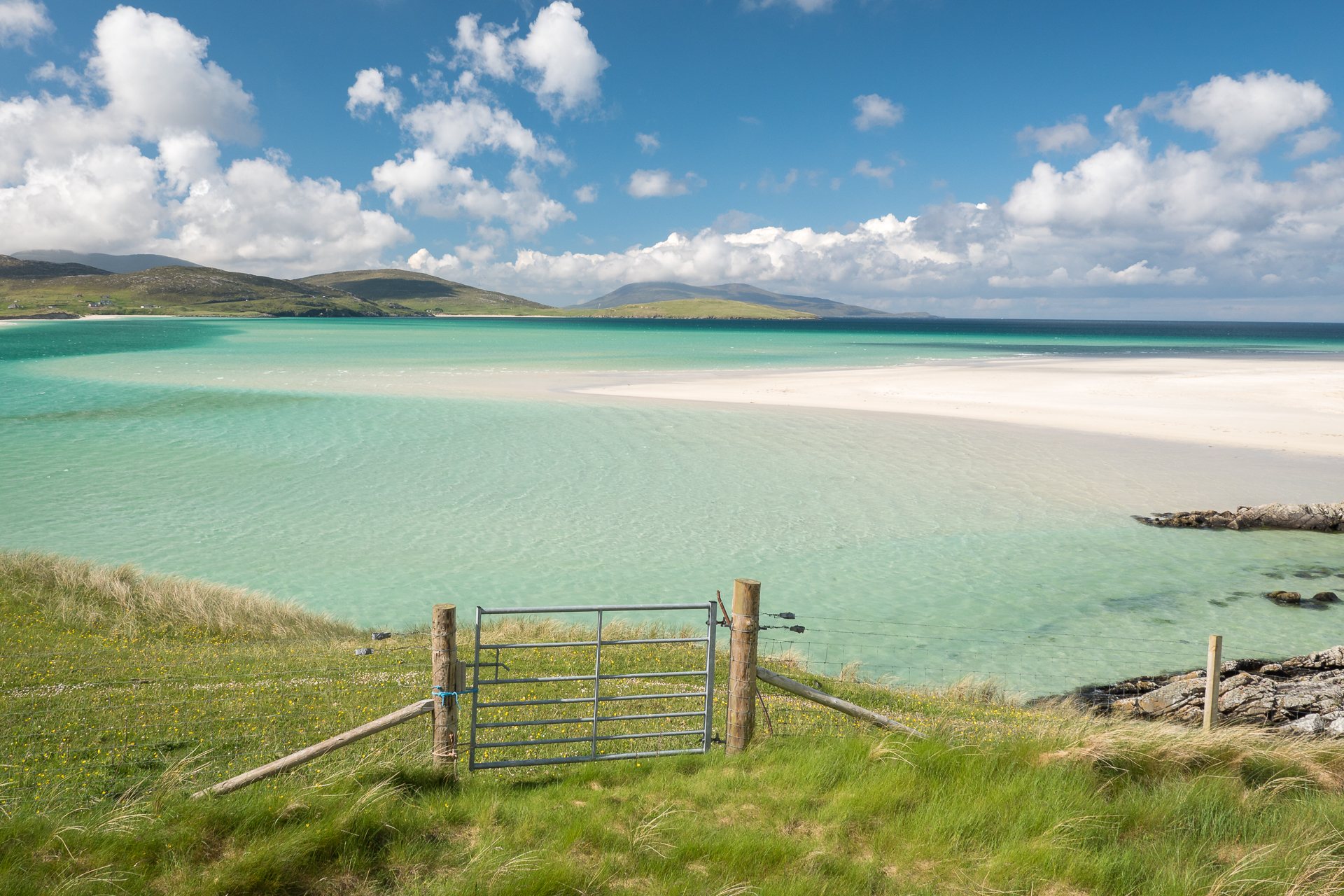
The first astonishment of the Outer Hebrides is not remoteness but the way light erases familiar measures. At Luskentyre, the water can look like green glass and the sand newly illuminated; minutes later, a low cloud crosses Harris, extinguishes the bay and lays a blue shadow over the dunes. Nothing remains still except the feeling of standing at an edge. The Atlantic breathes behind every rise, even when hidden, and its murmur follows the road like a sentence not yet finished.
To travel here is to abandon the thought that an island can be understood by accumulating stops. Lewis and Harris share land but not temperament. Lewis stretches through ochre peat, lochs holding whole skies and horizons where one white house gives scale to the moor. Harris gathers itself into stone mountains, closer curves and sea inlets that suddenly shine between slopes of heather. No visible border announces the change. You feel it through the steering wheel, in the wind, in the moment the road begins to climb.
Single-track roads impose a precise courtesy. Look ahead, anticipate the passing place, yield and offer thanks. This modest choreography slows a journey without diminishing it. Instead, it reveals a thread of smoke above a house, sheep motionless by a fence, the dark gleam of cut peat. Gaelic life is not decoration supplied for visitors; it is language, work, worship, memory and an ordinary present. Arrive modestly, speak place names without making trophies of them, and accept that Sunday, weather and community keep rhythms of their own.
Towards evening, as vehicles grow scarce, the islands appear to widen. There is no need to chase a flawless sunset. Find a safe place, hold the door against the wind and walk for a few minutes. Wet grass darkens your shoes; a gull hangs in the air without advancing; the sea below passes from pewter to violet. Then the local form of luxury becomes clear. It is not possession of the landscape, but enough time for the landscape to unsettle you.
Places where memory meets the horizon
These visits trace a reading of the islands from prehistoric stone to navigational light. Each deserves time, attention to the ground and respect for the lives continuing around it.
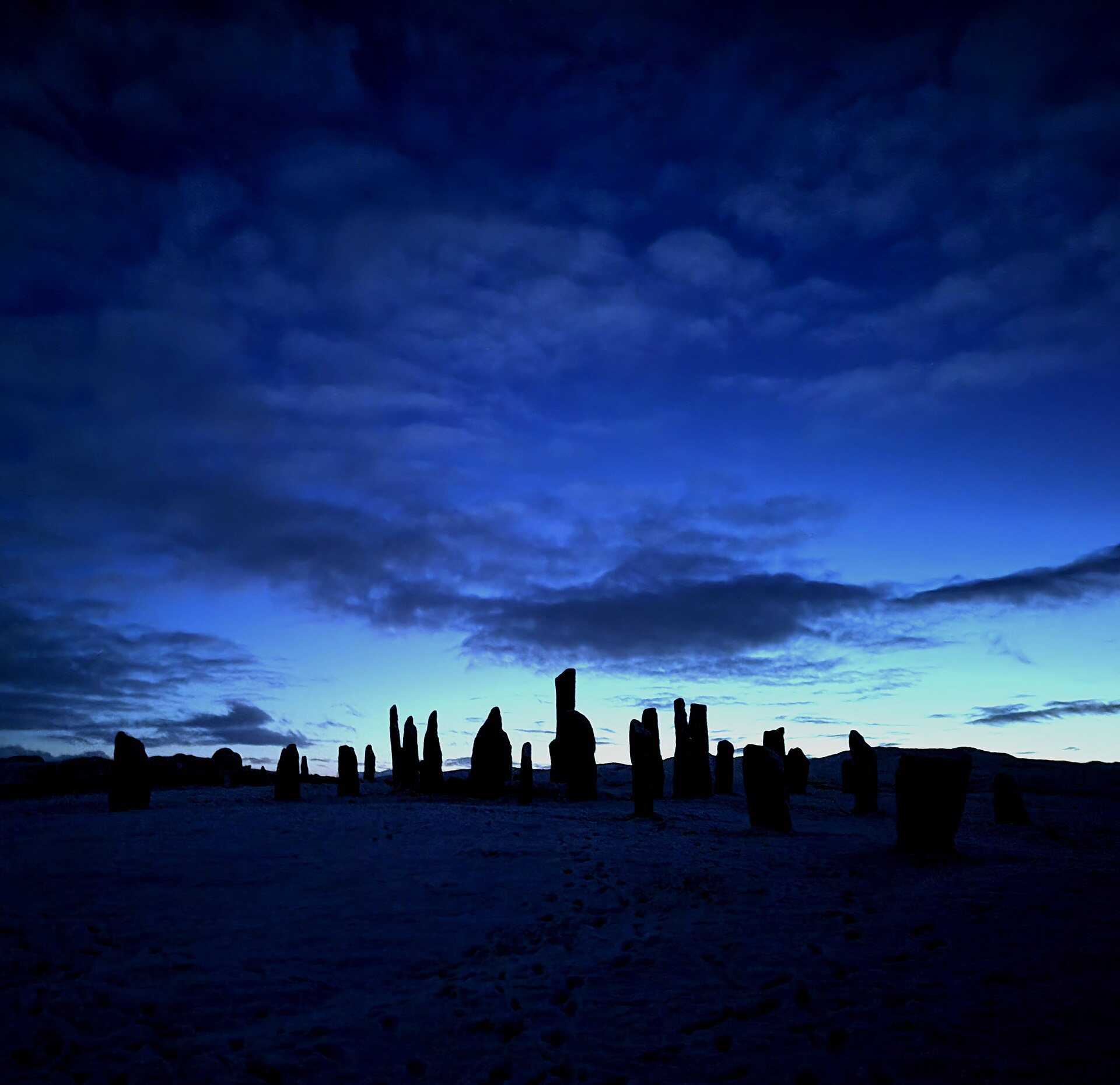
Calanais / Callanish Stones
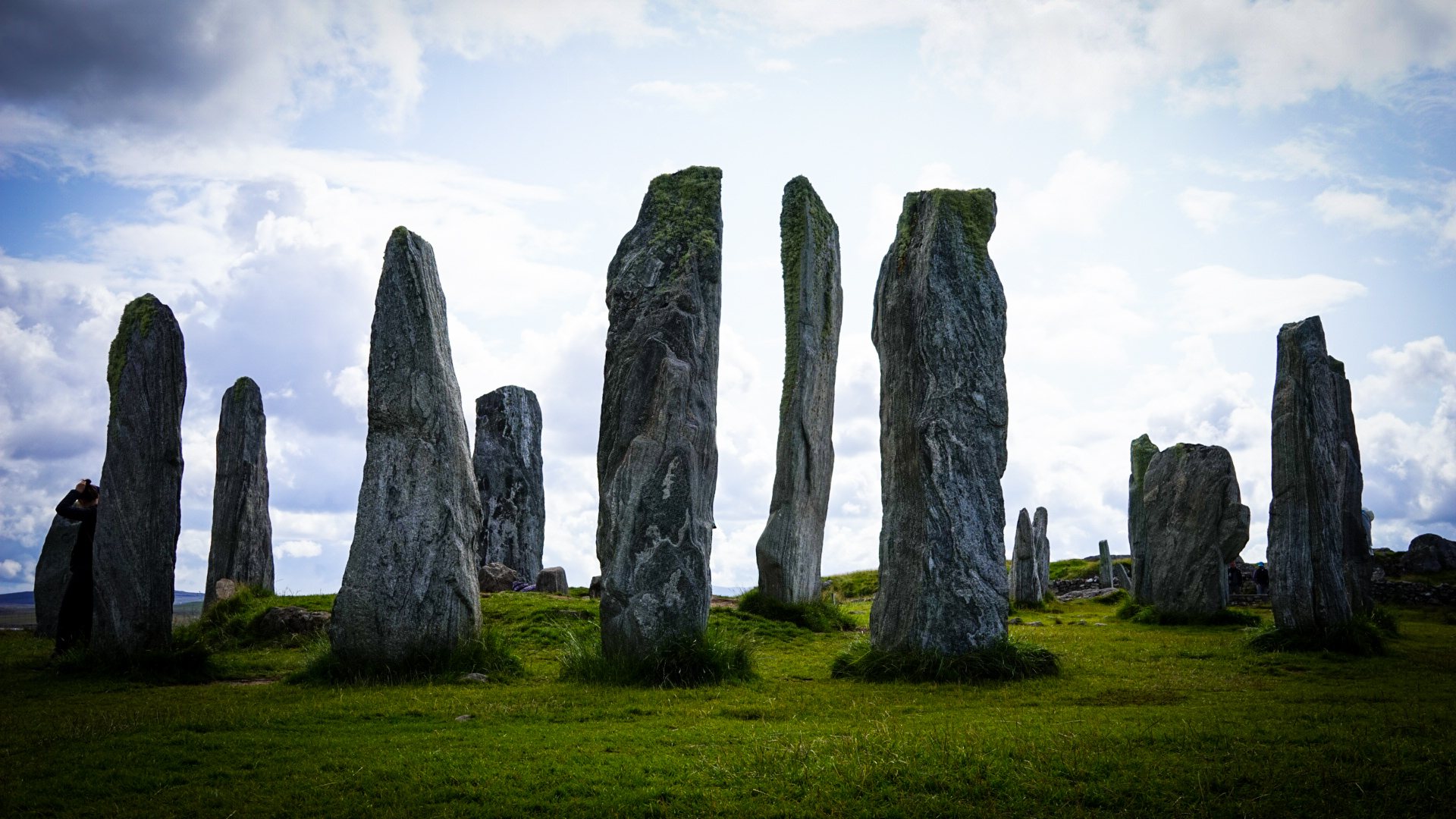
At Calanais, the monoliths seem not to have been placed upon Lewis but raised from its own substance. An avenue of stone approaches a circle whose centre receives the wind without shelter. Arrive slowly: first hold the complete figure at a distance, with lochs and low hills beyond it, then move through the gaps where each stone reveals different veins, lichens and contours. The visit becomes richer when no single explanation is forced upon it. This is an ancient place inside a living landscape, not an isolated stage set. When others are present, wait, listen, and allow quiet to gather again between voices.
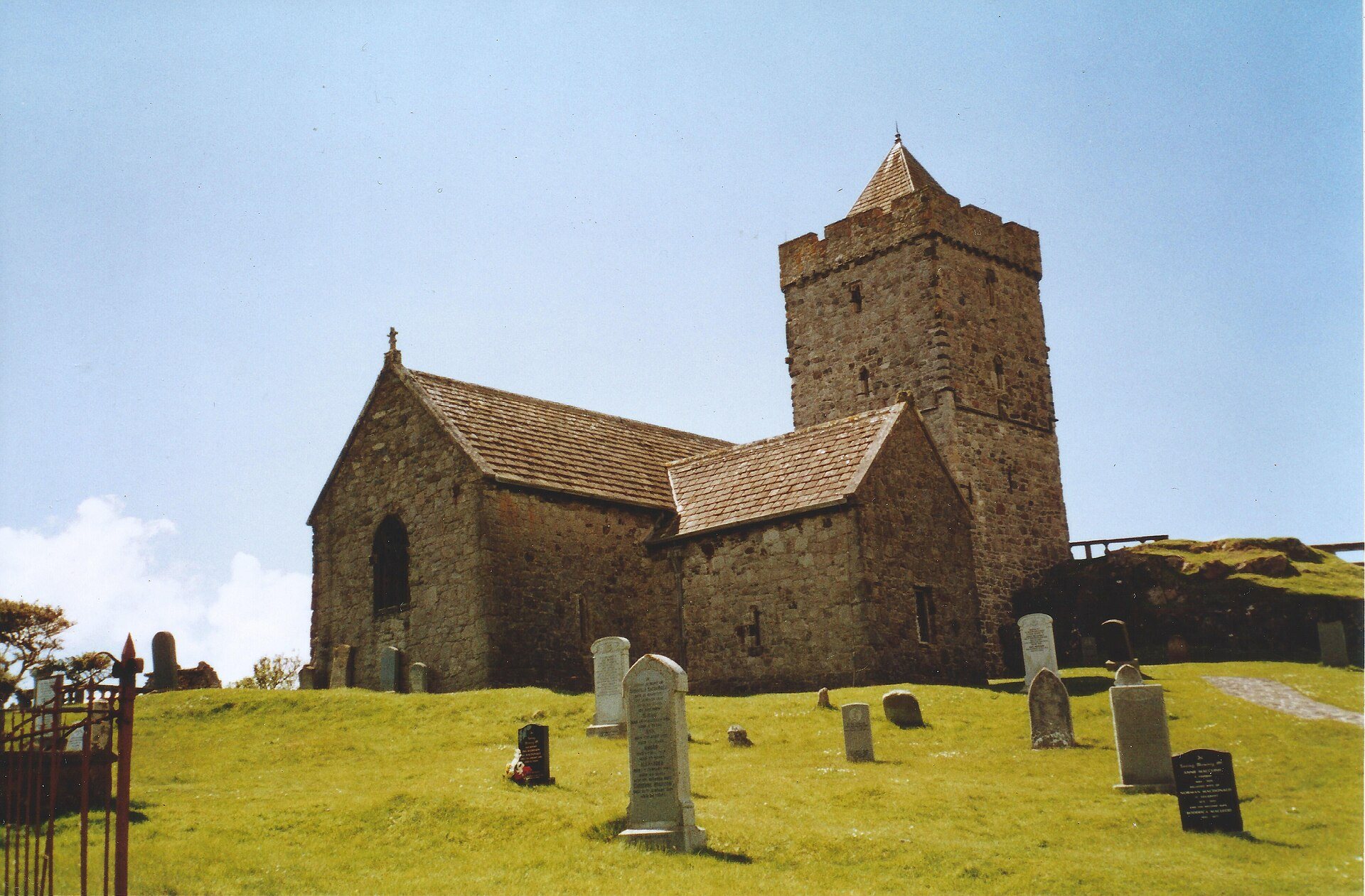
St Clement’s Church at Rodel
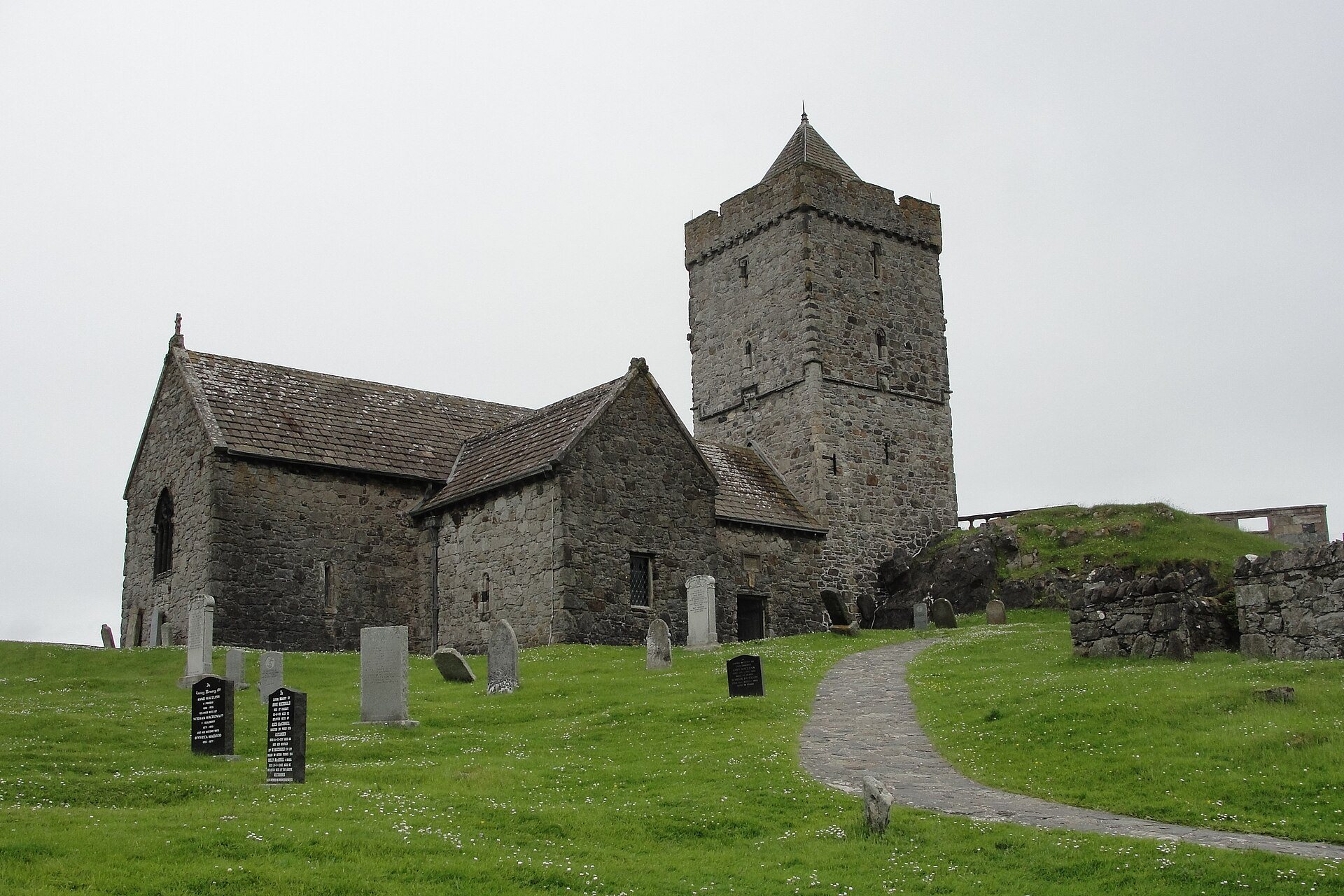
At the southern end of Harris, St Clement’s rises above Rodel with a tranquil gravity. Its stone seems to keep the colours of rain and salt; sea and gentle hills prevent it from acquiring the detachment of an urban monument. Inside, lower your voice and attend to architecture, carved tombs and the continuity of a spiritual site exposed for centuries to Atlantic weather. Do not arrive merely to mark the end of a road. Walk around the exterior, notice how the tower orders the small settlement and save time for the landscape upon which the church itself appears to gaze.
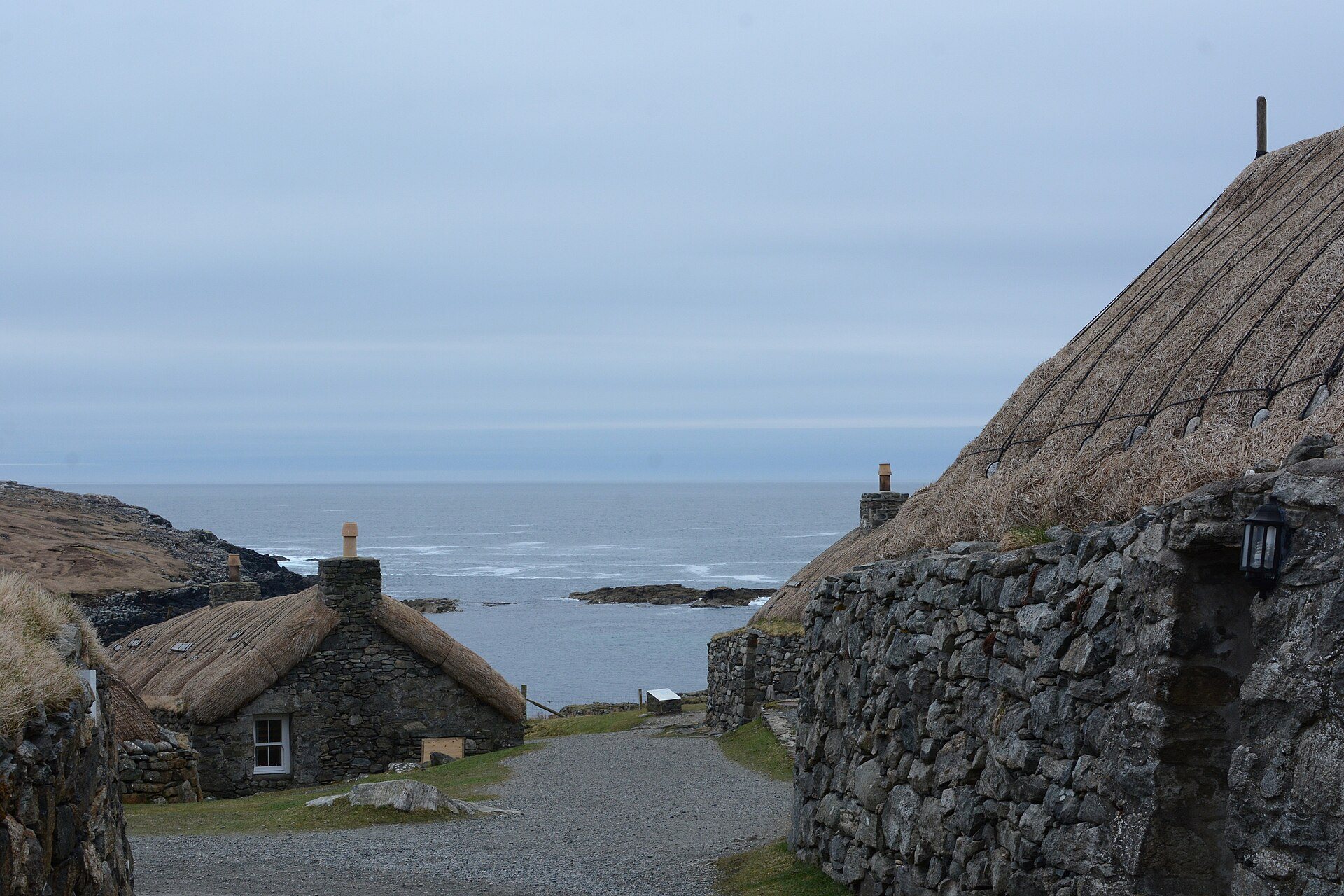
Gearrannan Blackhouse Village
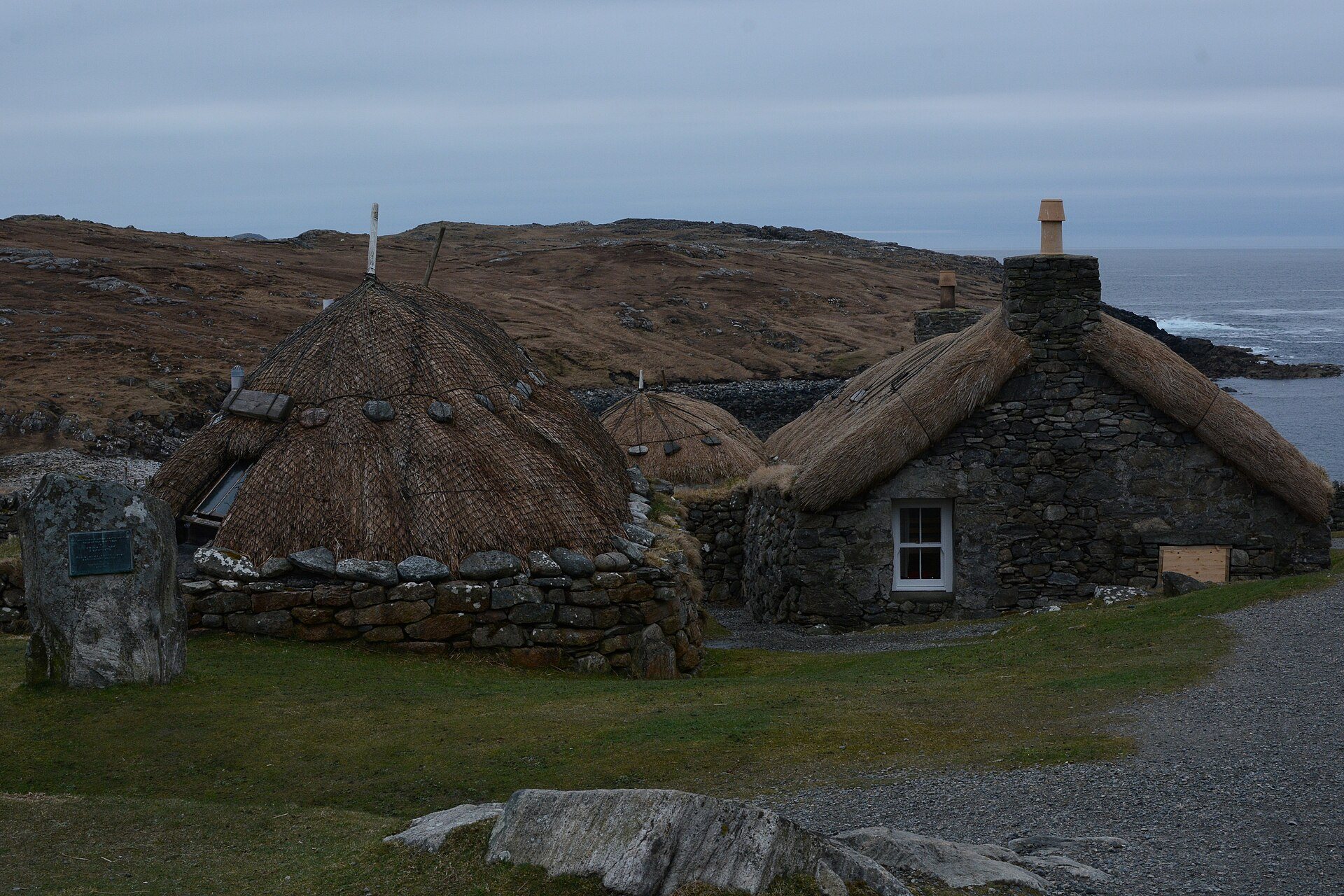
The blackhouses at Gearrannan gather above the ocean as though seeking shelter in one another. Thick walls, thatched roofs and low profiles explain better than abstraction what it means to build against wet and wind. The village preserves material memory and helps a visitor imagine the closeness of home, labour and coast, but it asks for care: this is not a rustic fantasy, but part of the particular social history of Lewis. Follow the paths without haste, watch light enter the interiors, then step back out towards the maritime edge. The contrast between dark refuge and bright horizon remains long after departure.
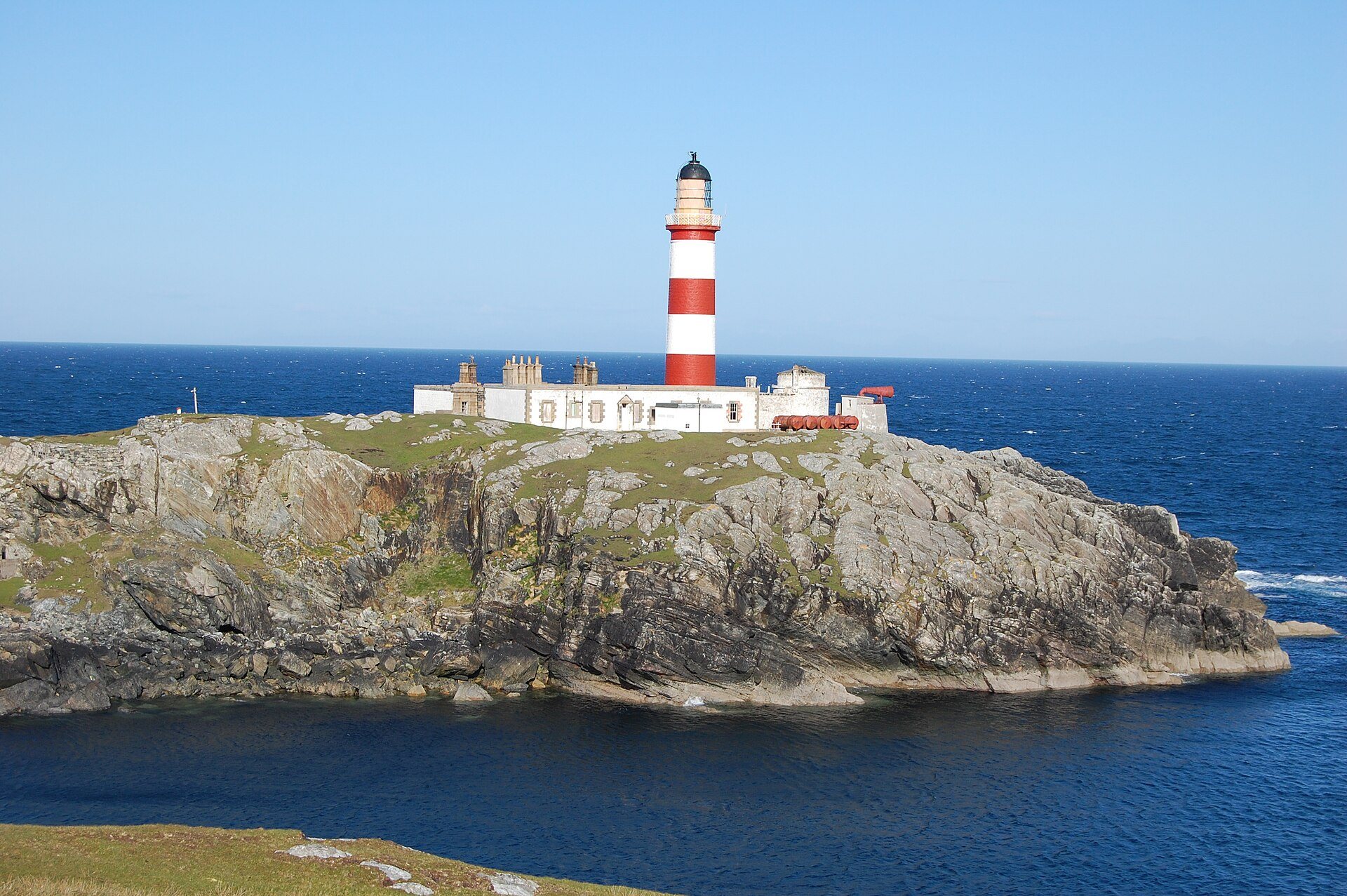
Eilean Glas lighthouse
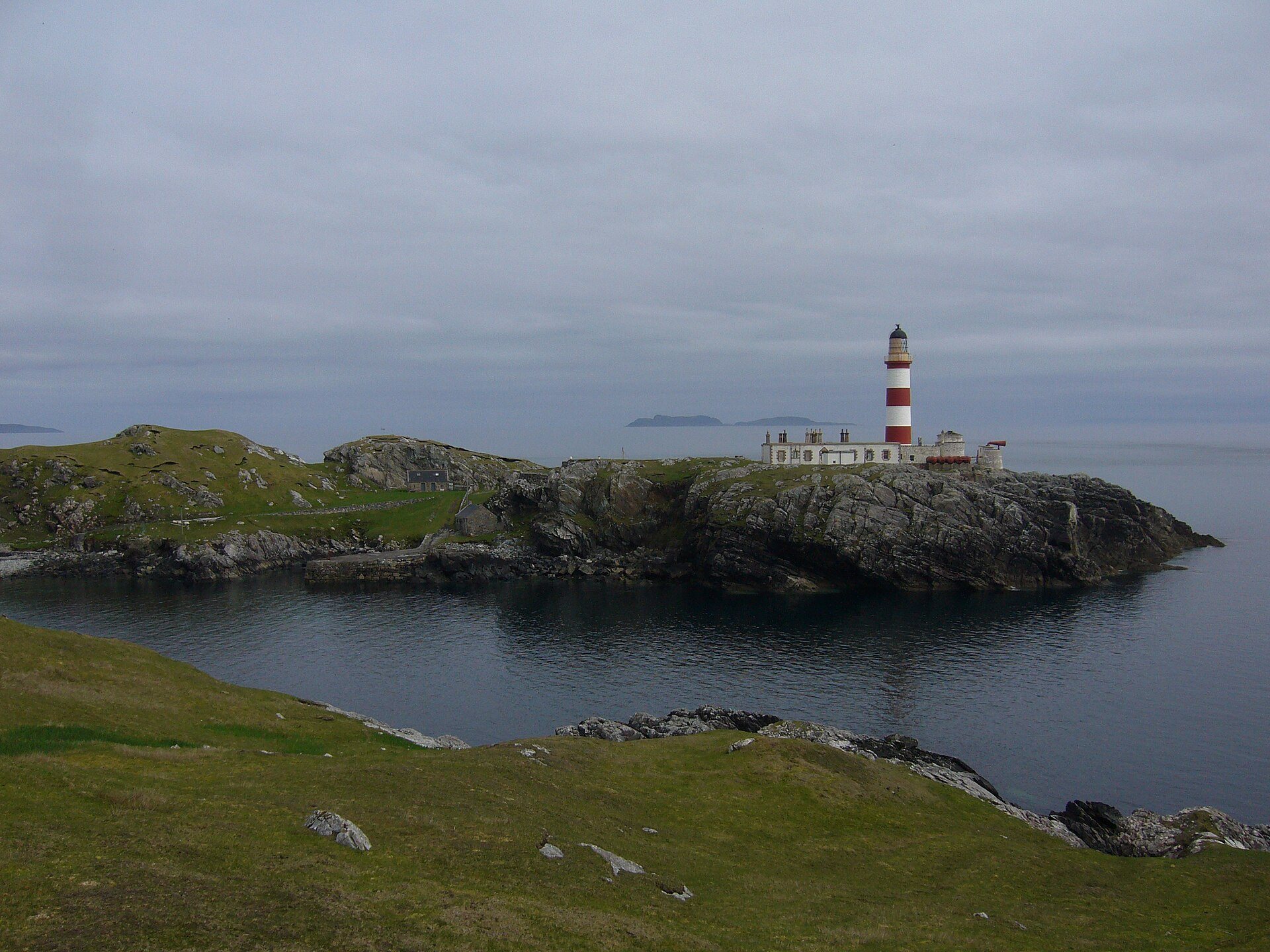
On Scalpay, the path to Eilean Glas makes arrival a gradual act. The lighthouse appears at last as a lucid signal among rock, grass and open sea, its bands of colour almost intensified by a grey sky. Architecture does not conquer the landscape here; it negotiates with it. Judge conditions before walking, carry waterproof layers and do not underestimate wet ground. At the lighthouse, remember to look behind you towards the broken coast already crossed. The true scene includes the distance covered, wind that makes conversation difficult and the knowledge that this light exists for mariners moving beyond your sight.
A journey with room for the wind
Treat this route as a flexible score rather than a closed agenda. Confirm ferries and conditions through official sources, then adapt each day to the place where you sleep.
- 01
Stornoway and the first evening
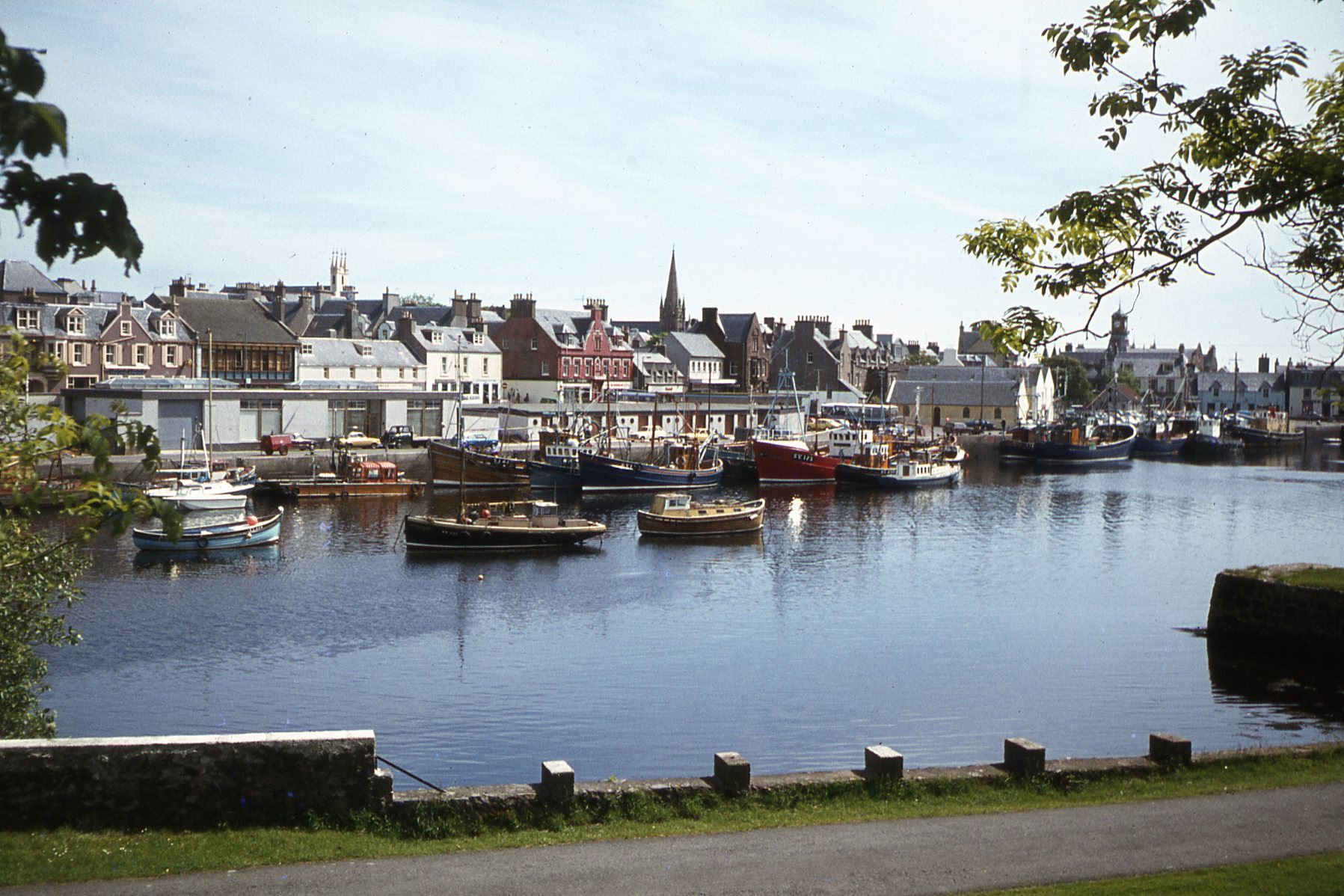
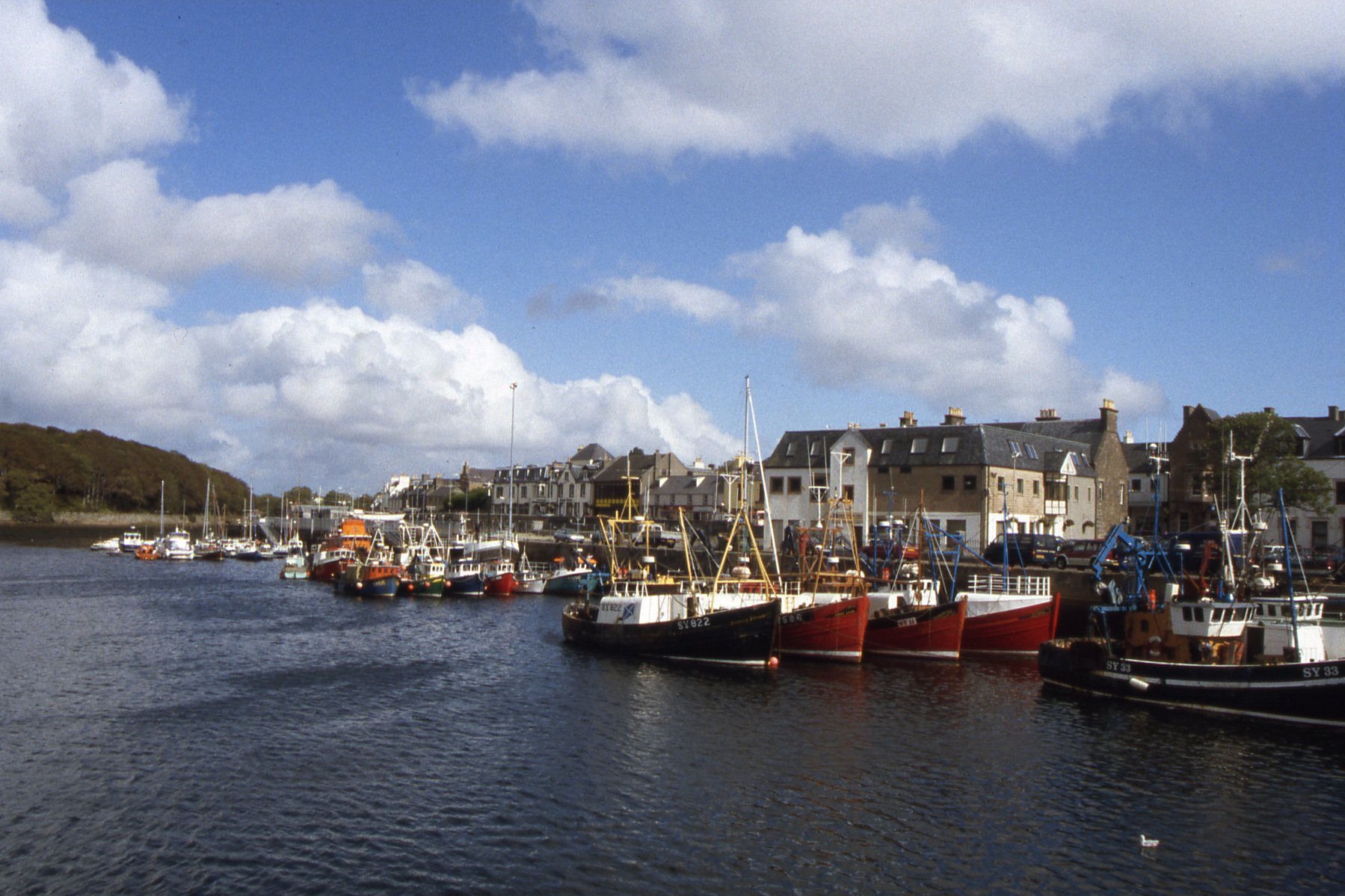
Settle in without adding a major excursion. Walk beside the harbour, cross towards the Lews Castle grounds and gather provisions for the days ahead. The town offers a valuable transition: working boats, ordinary conversations and relative shelter before the moor. Let arrival remain an experience in its own right.
- 02
Calanais and western Lewis
Leave ample time for Calanais and give the stones longer than expected. Continue towards the western coast, stopping only where parking is unambiguous and safe. Gearrannan can fill the latter part of the day, allowing prehistoric and domestic memory to be joined by the peatland between them rather than compressed into quick visits.
- 03
The change from Lewis to Harris
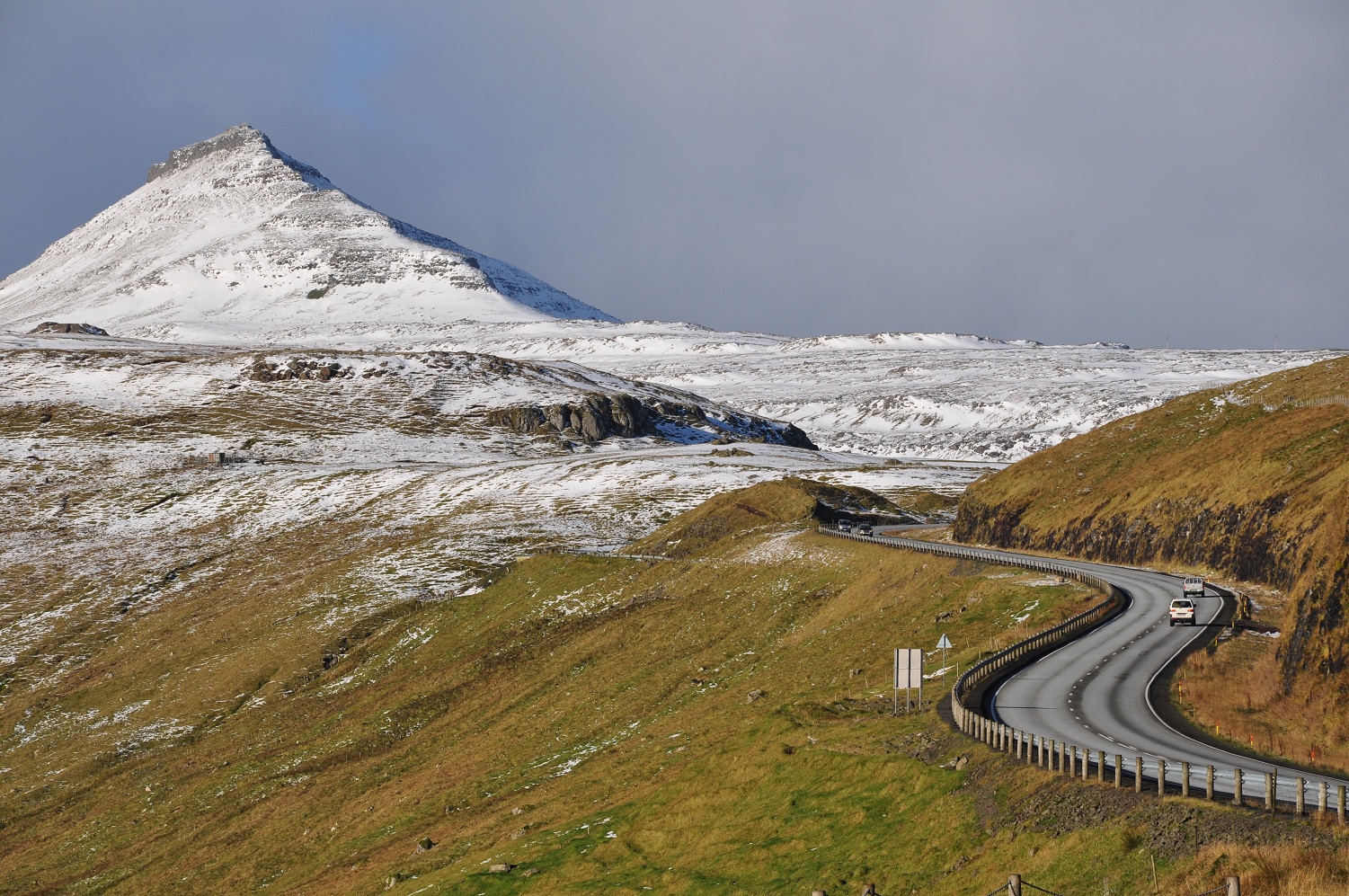
Devote the road towards Tarbert to the gradual change in relief. Do not crowd the day: curves, mountains and sea inlets invite unplanned pauses. If the light holds, finish on a western beach; if hard rain arrives, use the time to reach your base, rest and watch the harbour without treating altered plans as failure.
- 04
Rodel and southern Harris
Follow the southern road to St Clement’s and enter with enough time to circle the exterior as well. On the return, let small bays set the pace. Every turning need not become an obligation. Choosing one short walk and remaining with it often reveals more than a hurried sequence of viewpoints.
- 05
Scalpay and Eilean Glas
Give the lighthouse a generous weather window and decide on the walk according to wind, rain and ground conditions. Carry water, waterproof protection and firm footwear. Afterwards, return without another large objective; a simple meal and an evening in Tarbert complete the day better than a race towards one more coast.
- 06
The unwritten day
Keep a clear interval before departure. It may allow a return to a beach under another tide, a walk beside the harbour or time spent watching weather from a window. That margin absorbs operational changes and, more importantly, lets the journey respond to the islands rather than fight them.
Flavours that belong to the weather
Eating well begins by acknowledging island scale: local produce when available, opening patterns worth checking and prudent reservations where there are few tables.
Fish and shellfish from nearby waters
In harbour settlements, ask what comes from nearby waters and what preparation best suits the catch available that day. A hot plate after rain — fish, potatoes, butter, perhaps soup — can contain the whole landscape without ornament. Provenance and supply change, so listening is better than arriving with a rigid checklist.
Smoked salmon and the cold pantry
Smoking belongs to a food culture shaped by keeping, concentrating and waiting. Salmon can make a light road meal with bread, cheese and something fresh, provided it comes from an authorised shop and is stored correctly. More than a souvenir, it brings smoke, salt and patience into one measured mouthful.
Lamb and machair grazing
When locally sourced lamb appears on a menu, it merits attention for its connection with coastal grazing and island husbandry. It needs no mythology, only assured cooking and enough time to eat. Asking about origin confirms more than assuming it and supports an informed choice without turning a living practice into a slogan.
Oats, baking and tea after the road
Some afternoons culminate in tea and something baked while waterproofs dry. Oats, biscuits and plain cakes belong naturally to pauses between journeys. Check opening patterns, especially beyond larger settlements, and keep a small reserve so that remoteness does not have to imitate urban availability.
Sleeping where the journey finds its scale
These real properties were checked on Booking.com on 2026-08-28. The links lead to clean, direct listings and make no promise about price, availability or particular facilities, all of which should be checked before booking.
Booking.com attribution through the CJ network is active. Links marked as sponsored may generate a commission for Vagamora if a booking is completed, at no extra cost to the user.
Hotel Hebrides
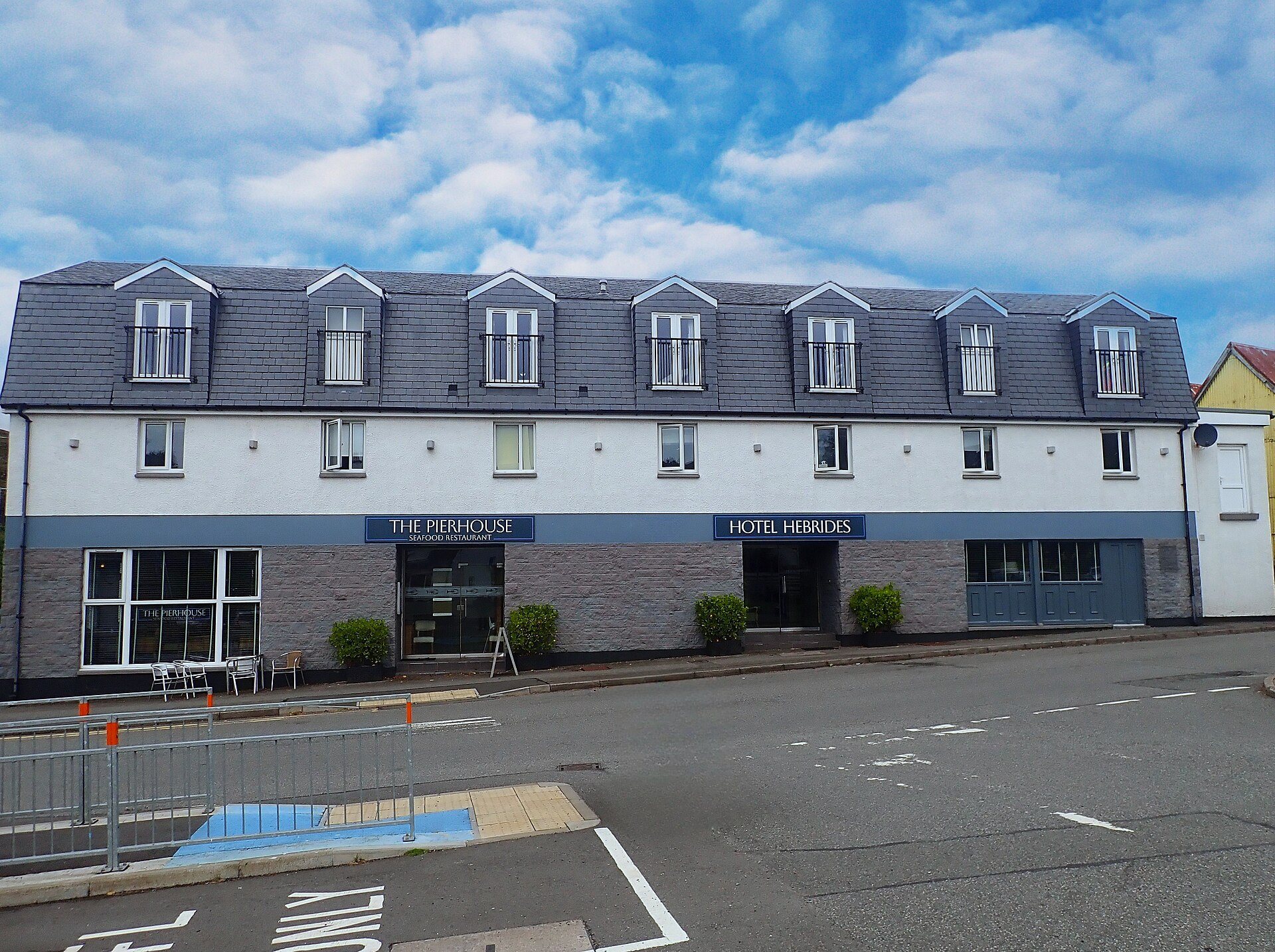
In Tarbert, the day begins with the harbour inside the landscape: rigging, working boats and roads opening west towards the beaches or south towards Rodel. Hotel Hebrides is first of all a geographic decision. It allows an evening return to the small settlement without another long drive and reduces friction when Harris is the centre of the journey. Read the current property listing closely and choose it for that position rather than for assumptions about details that may change.
Check accommodation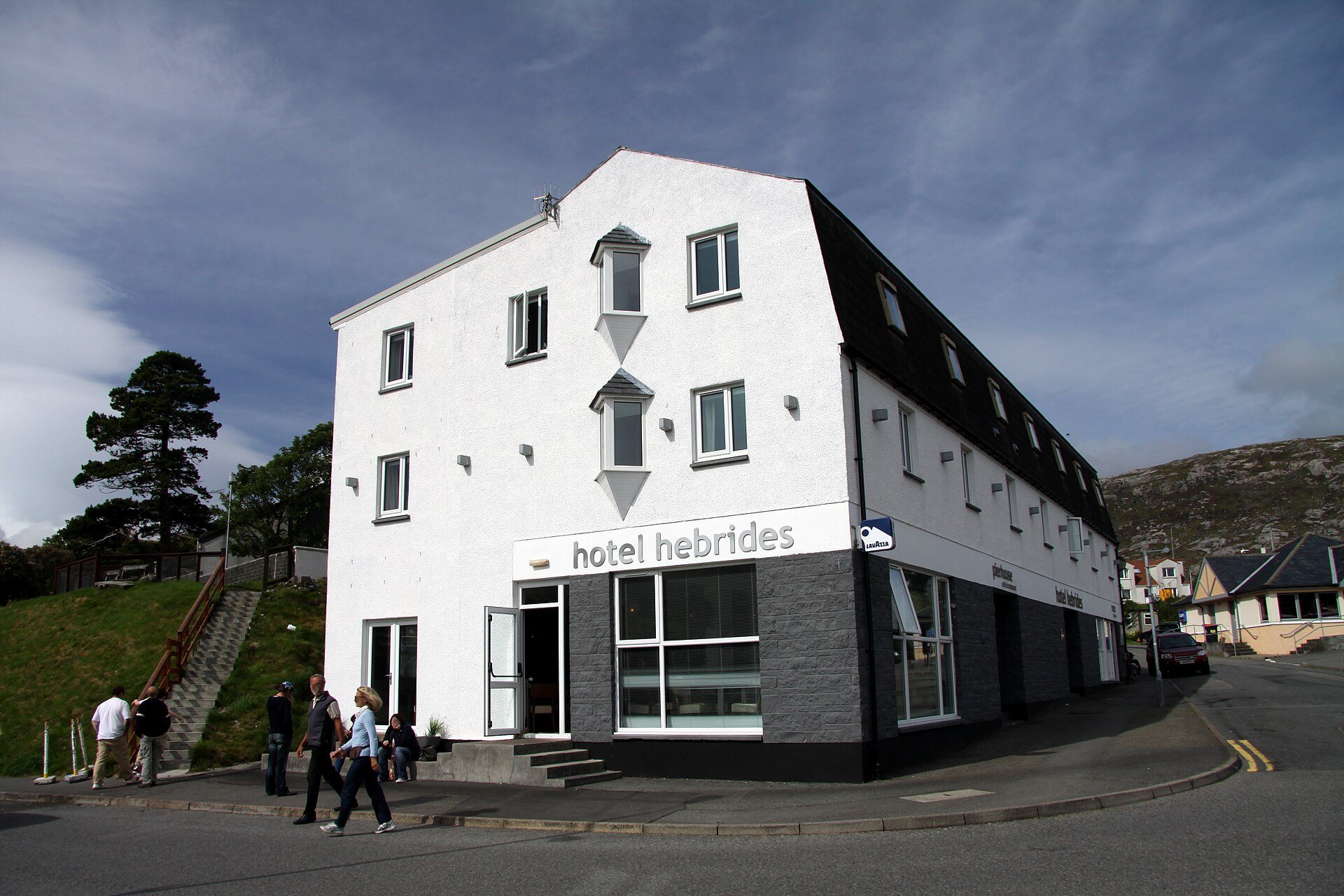
Lews Castle
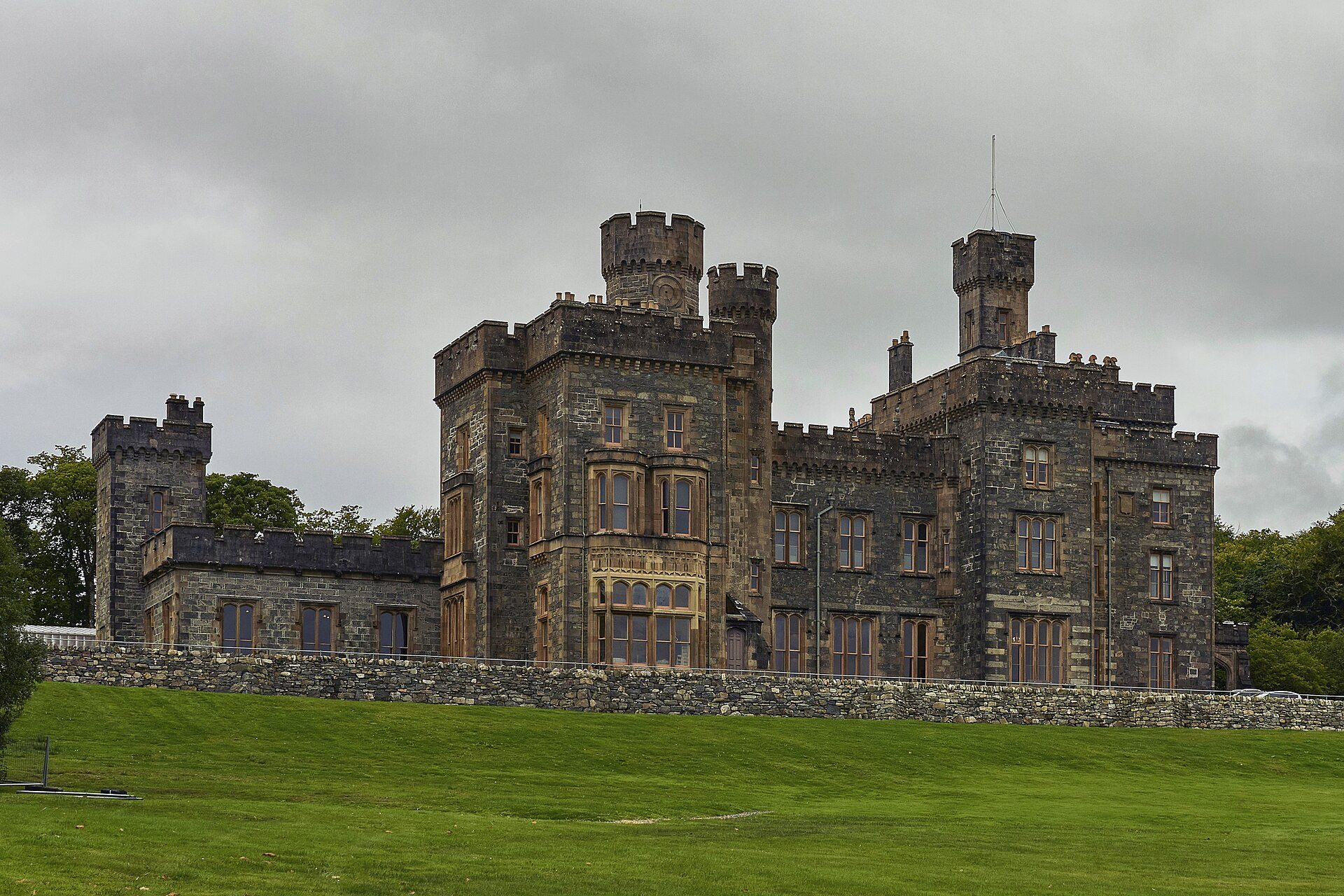
Across Stornoway harbour, Lews Castle changes the tone of arrival. The town remains close, yet the approach passes through wooded grounds that seem to soften the open wind of Lewis. It is a sensible base for combining daily harbour life with journeys to Calanais, Gearrannan and the western peatlands. On returning, the lights of Stornoway stitch themselves across the water. The choice makes sense for its historic setting and the mobility offered by the islands’ principal town.
Check accommodation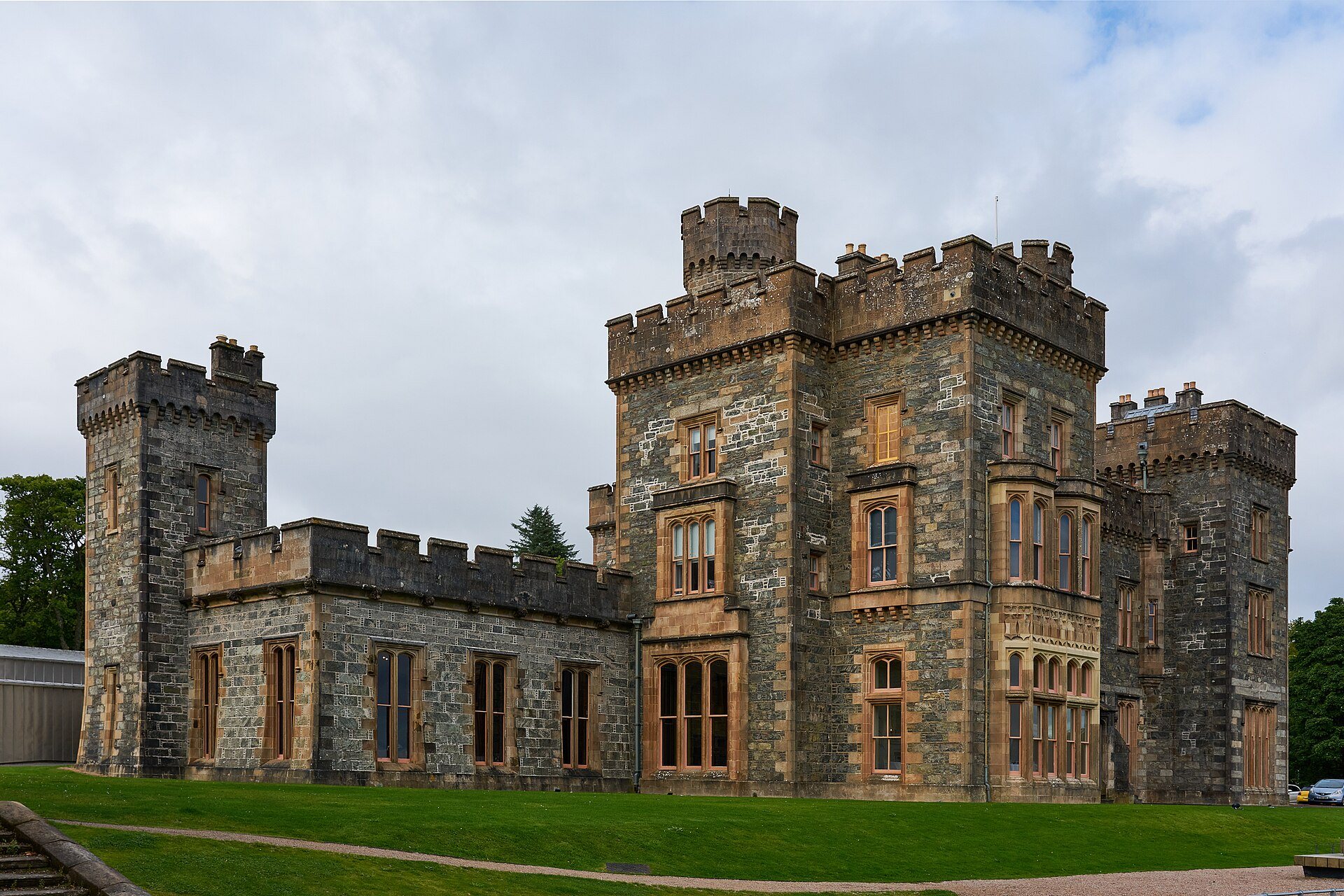
Night does not close the landscape
In Stornoway, darkness retains human signals: a lit window, harbour lights swaying on the water, the remote murmur of an engine. On Harris, night can feel more exposed. Wind circles the building and rain touches glass with almost domestic persistence. Do not demand a nocturnal postcard; switch off urgency instead. Outside the brightest months, a brief venture under clear skies may reveal extraordinary depth, but weather decides and safety comes first.
The peatland, which by day appeared to be an empty reach, changes its presence at dusk. It stores water, reflects the last openings in the sky and reminds us that this is not leftover ground. It is ecological archive and worked landscape, a fragile surface where a misplaced footstep leaves evidence. Slow travel, then, is more than an aesthetic preference. It means careful driving, firm paths, unobstructed access and less insistence on getting close to everything.
On departure, the most persistent images rarely obey the plan. Perhaps it will be a rain-dark bench outside Rodel, a gust passing visibly through the grass near Eilean Glas, or the earthy interior scent of a house at Gearrannan. The Outer Hebrides ask for no grand declaration. They ask for attention. In return, they offer a rare sensation: that you have travelled not over a map, but inside its weather.
Preparing well without taming the islands
Weather uncertainty does not remove the need for planning; it makes good planning more important. Use official sources and check again whenever a connection is critical.
- Reserve accommodation and sea crossings ahead when the route depends on links between island groups. Consult the official operator before setting out and retain a realistic alternative for wind or operational change.
- Measure journeys by time and conditions, not distance alone. On single-track roads, use passing places to let traffic cross or overtake, and never occupy them as parking spaces.
- Refuel and buy provisions before remote stretches. Services may be more limited beyond Stornoway and Tarbert, with availability also varying on Sundays and across the seasons.
- Carry warm and waterproof layers, grippy footwear and an accessible dry change. Sunshine, rain and strong wind can follow one another rapidly even during a short walk.
- Check tide, visibility and wind before walking on an exposed coast. Never cross flooded ground or approach unstable edges for a photograph, and turn back promptly when conditions deteriorate.
- Respect fences, livestock, croft access and local signs. Park only on firm, lawful ground without blocking gates, homes, working areas or access for emergency vehicles.
- On peatland, remain on recommended routes and sound surfaces. Saturated ground can conceal deep water or give way, while the habitat is easily damaged by improvised shortcuts.
- Download useful maps but do not rely on a phone alone. Tell someone about remote walks and adjust ambition to the group, the available daylight and the forecast.
- Treat communities, religious places and Gaelic culture as present realities. Ask permission when appropriate, keep noise low and accept that not every space exists for tourist consumption.
- Leave part of the journey unprogrammed. That margin can resolve delays, but it can also allow a return to a beach in different light, a proper rest, or an hour listening to rain without calling the day lost.
Light remembers in different ways
Stone, harbour, shelter and lighthouse form a visual sequence through which to revisit the islands without reducing them to a single shore.