A city opening beneath the wheels
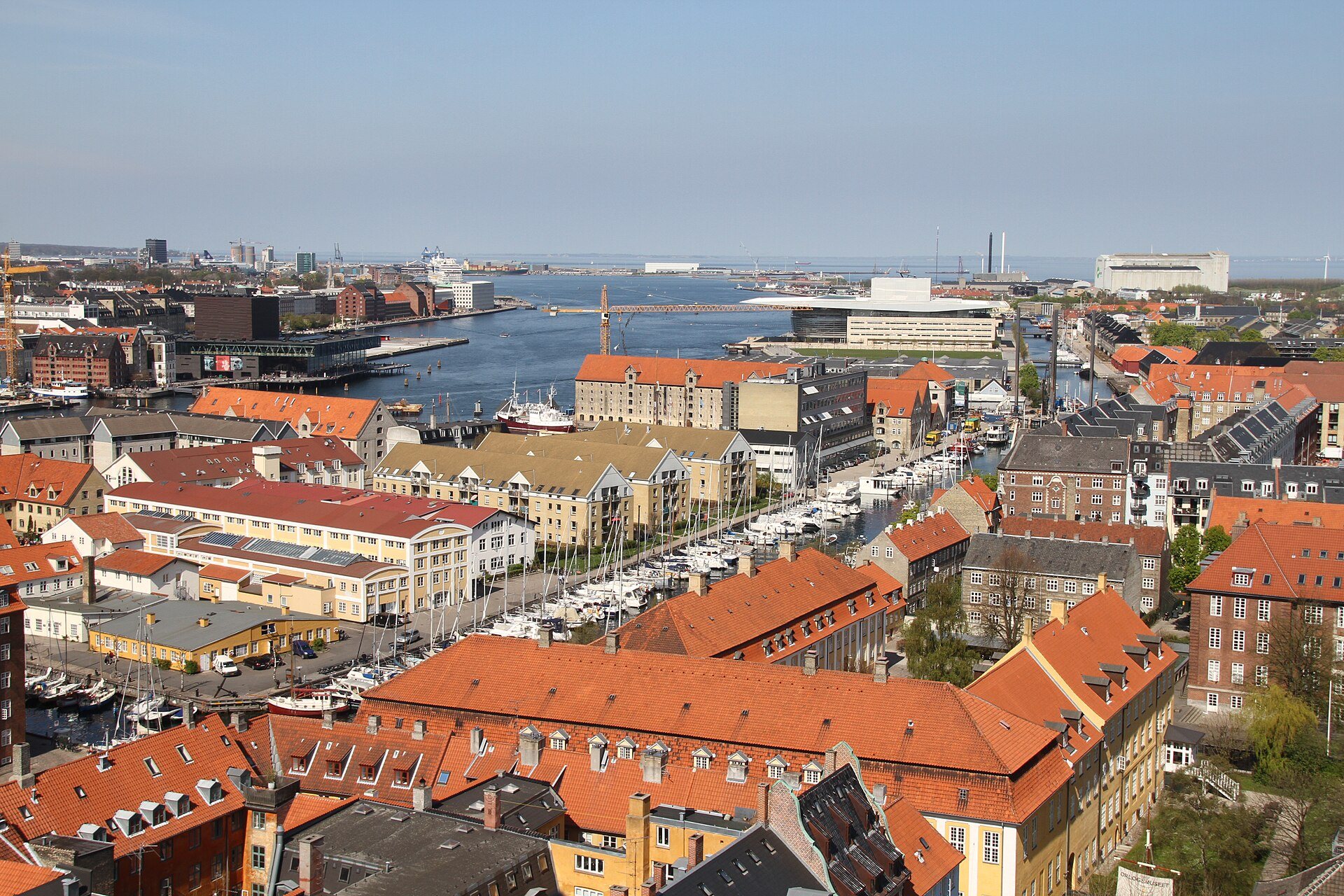
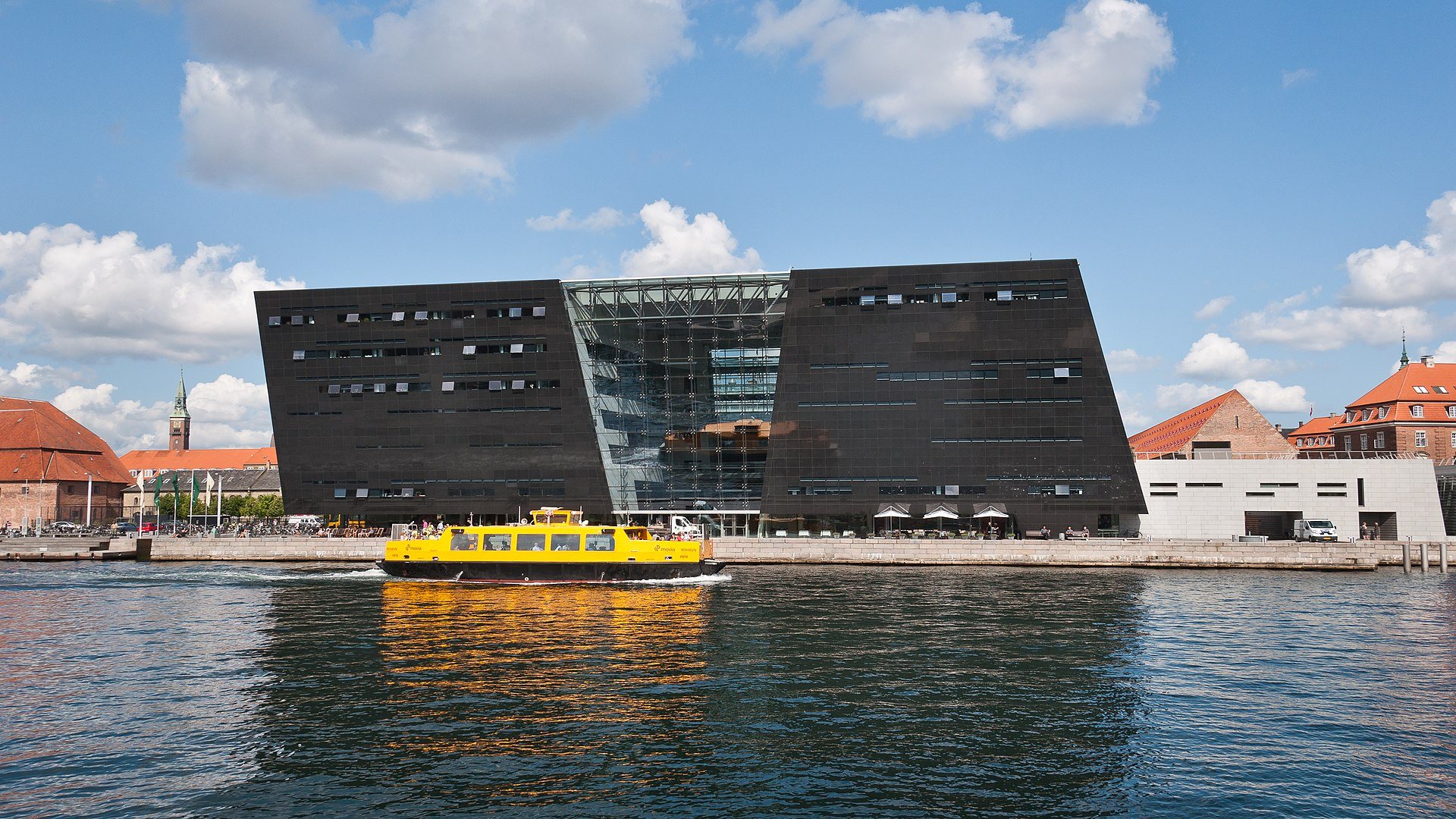
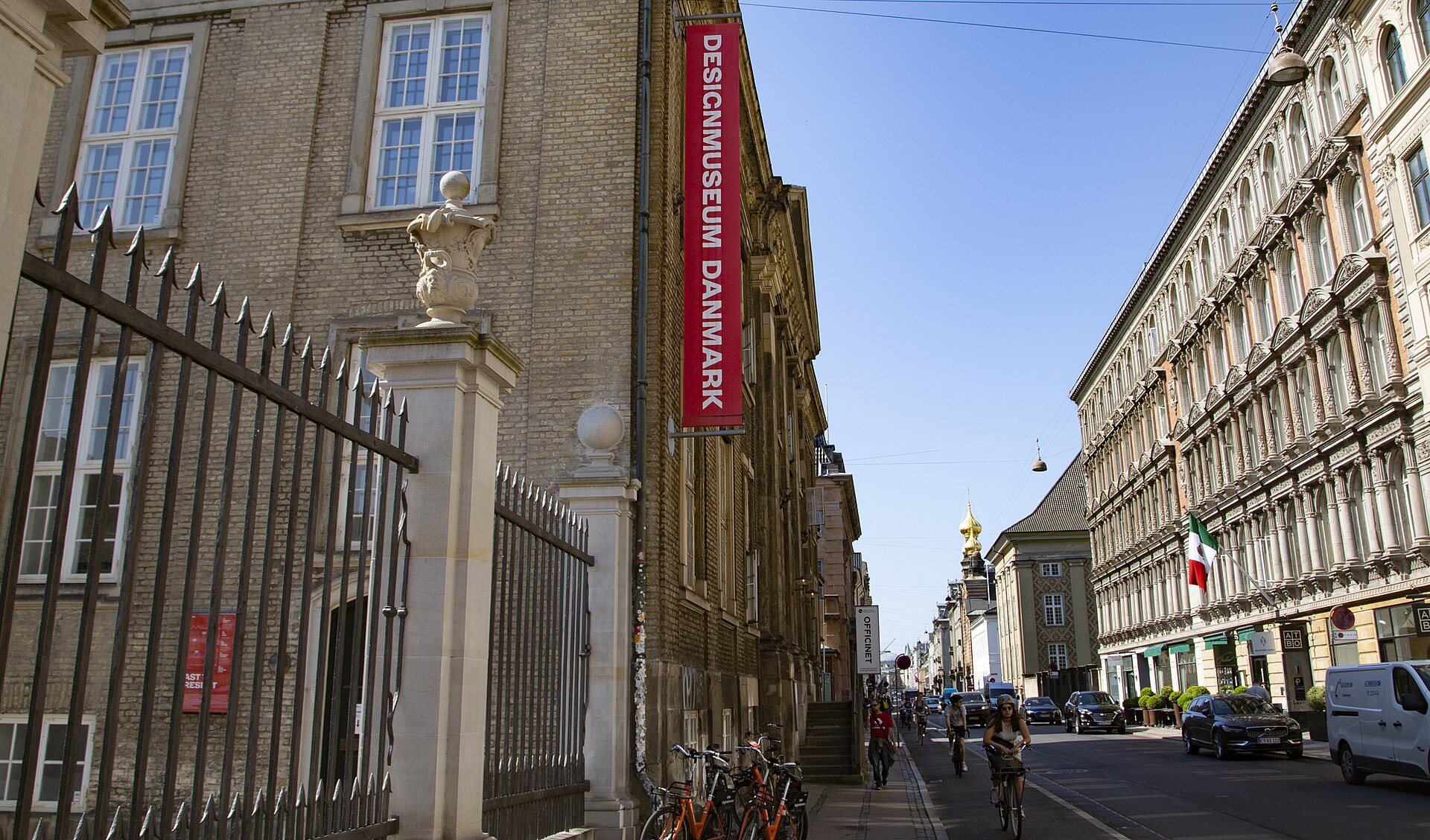
Copenhagen often begins as a sound: the brief whisper of a chain, a bell that warns rather than scolds, tyres changing their note as they leave stone for asphalt. Water appears a moment later, at the end of a street, between two façades or beneath the clear sweep of a bridge. It is not a motionless backdrop. It arranges the light, returns the clouds and gives the city a second surface over which everything excluded from the pavement seems to travel: reflections, masts, conversations divided by wind. To journey here is to learn this double grammar of pedal and tide.
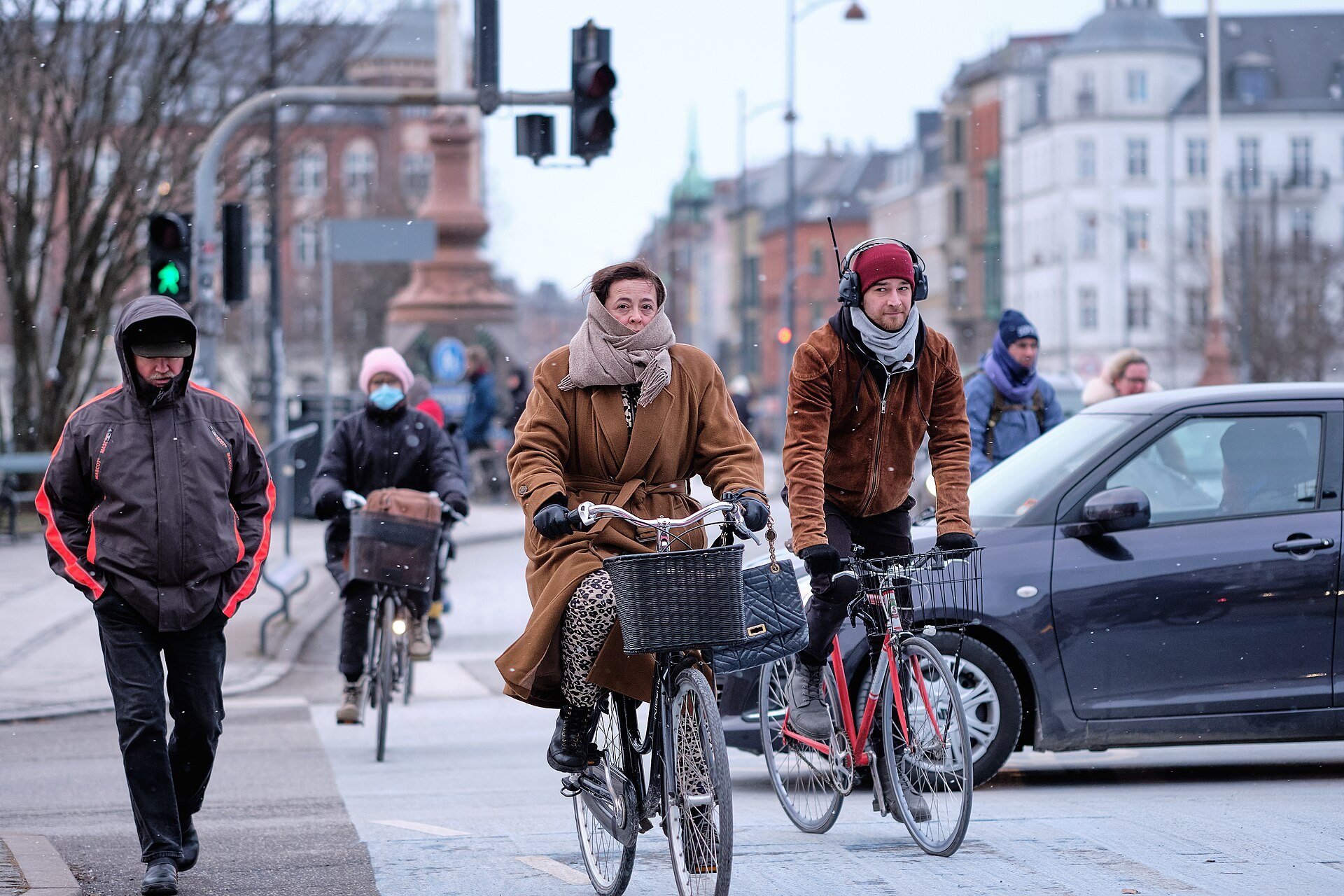
A bicycle does not instantly make a visitor local, yet it demands a similar alertness. You read the lane, anticipate an outstretched hand, leave room and understand that Copenhagen's ease rests upon small courtesies repeated by thousands. Once the movement feels natural, distance contracts without erasing detail. Flour marks a baker's apron; low windows hold lamps even in daylight; two riders stop to watch a boat enter the channel. The city ceases to be a cabinet of monuments and becomes a sequence of gestures, each practical and fleeting.
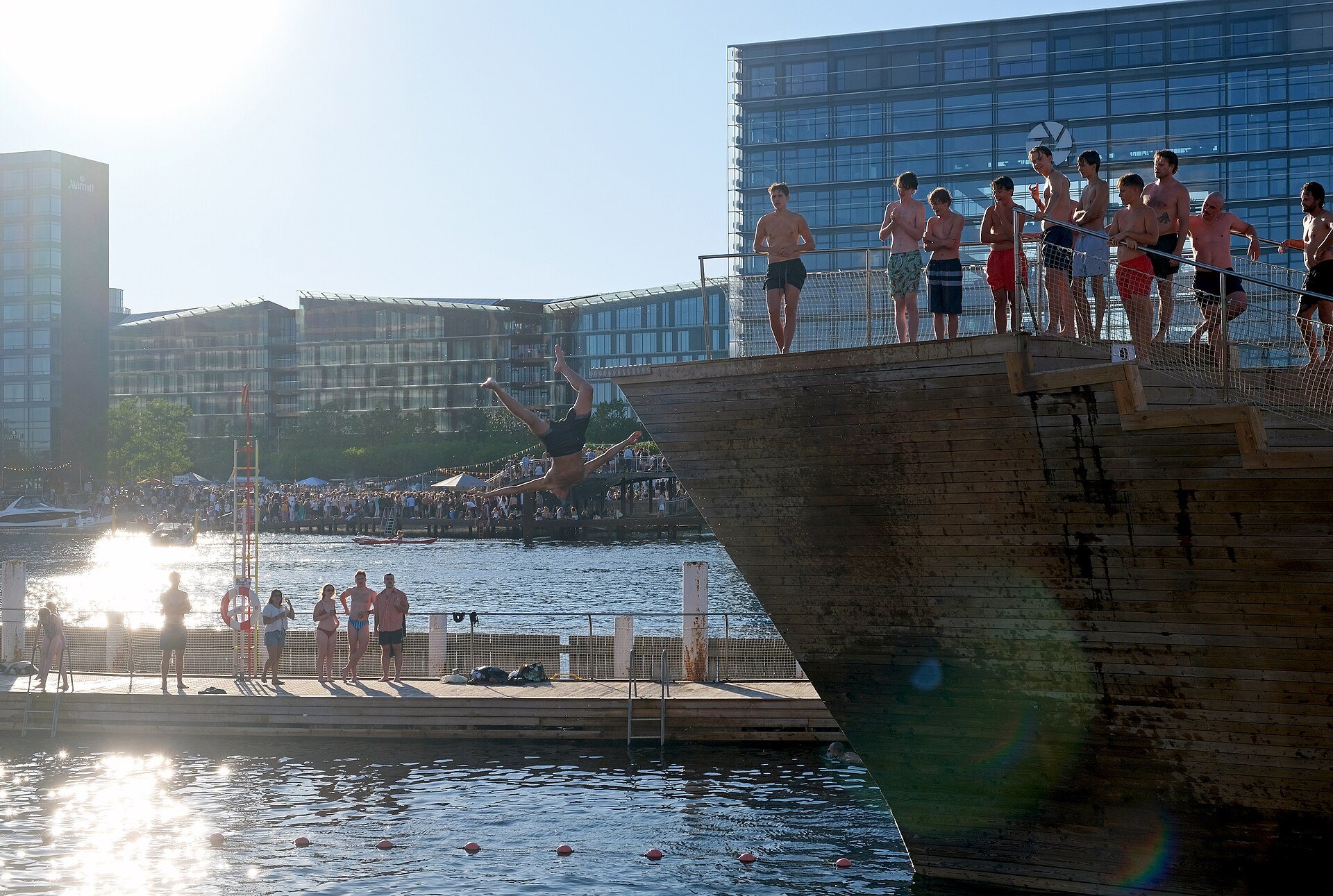
The harbour tells a different story of change. Where industry once created warehouses, labour and difficult edges, there are now bathing zones, footbridges, cultural spaces and shared tables. Renewal has not removed every rough surface, nor should a visitor pretend that each shed is a flawless stage set. Refshaleøen still offers width, metal, open lots and the sensation of having crossed beyond the postcard. That friction matters. It suggests that Danish design was not invented to decorate emptiness, but to negotiate how people live, make, mend and share finite space.
At dusk, Copenhagen lowers its voice without going dark. Candles on tables are less a fairy-tale promise than a modest way of making northern darkness habitable. After a day of wind, a clouded restaurant window becomes shelter; outside, bicycles lean against one another and harbour water turns the colour of lead. There is no need to hunt the word hygge as though it were an attraction. Choose a table without haste, put the phone away and let a small light gather the day together: the bridge crossed, the workshop entered, cold hands, the city still travelling beyond the glass.
Edges with distinct characters
These stops reveal several Copenhagens at once: historic harbour, cycling infrastructure, multicultural public space and a former industrial margin becoming a creative testing ground.
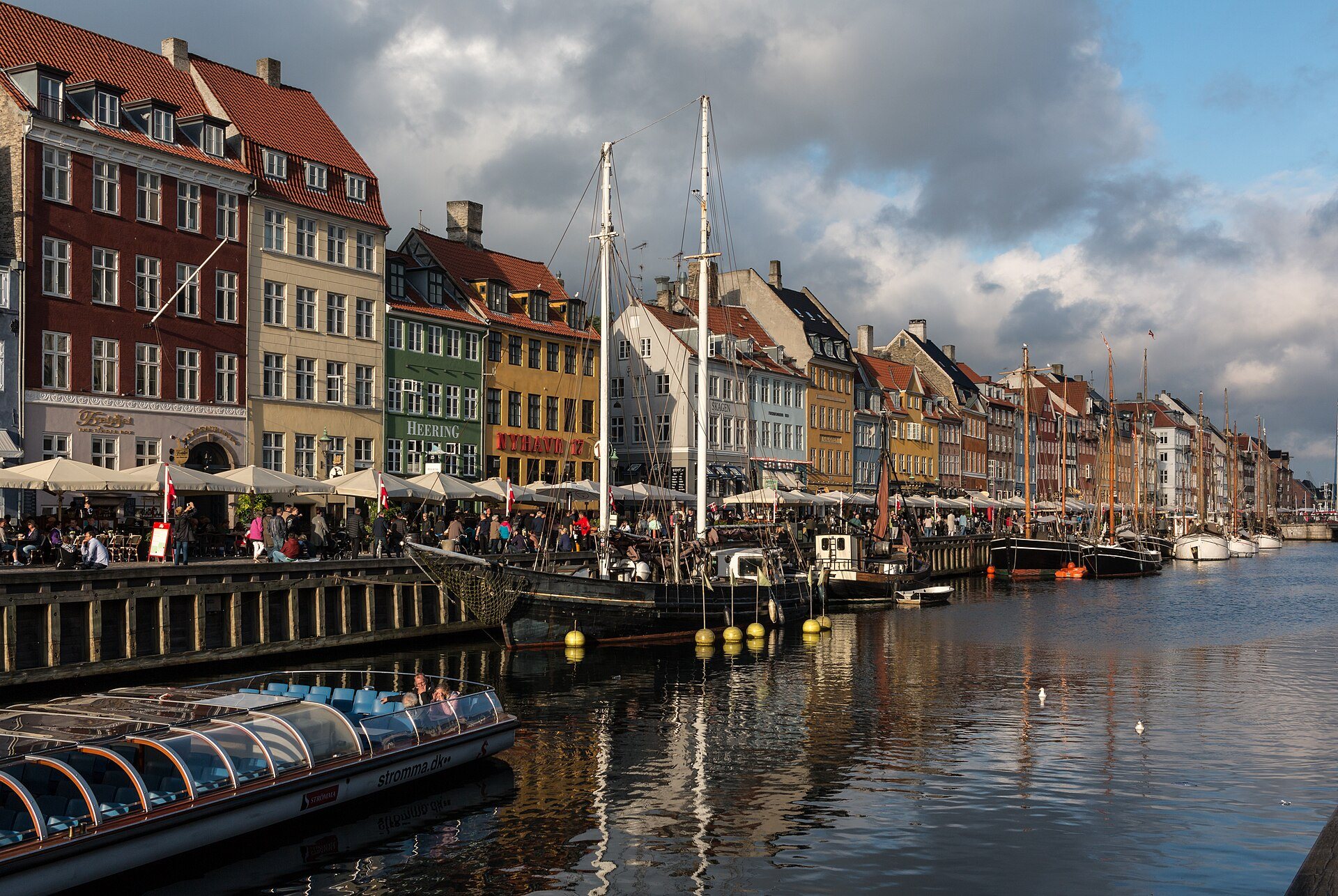
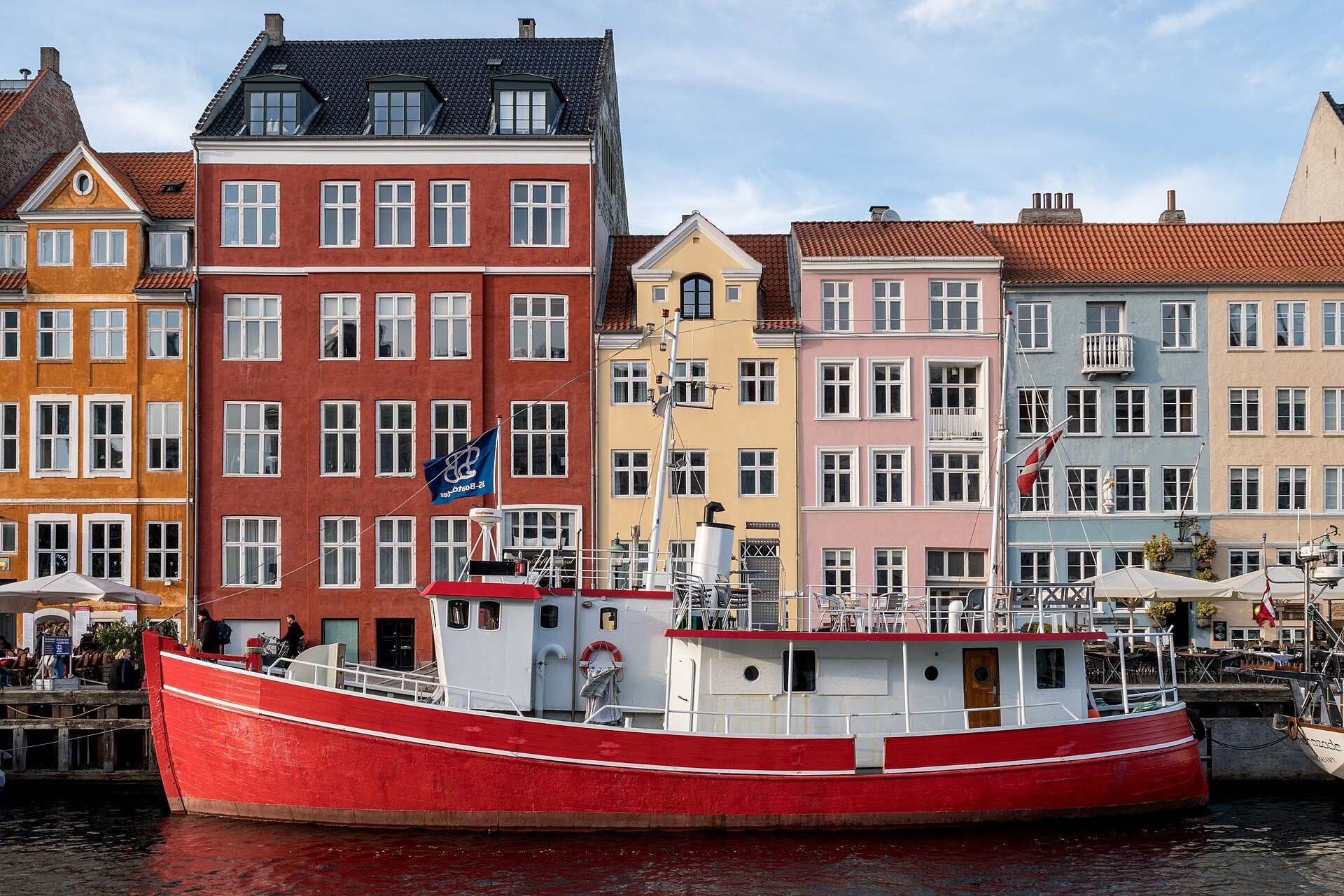
Nyhavn
Nyhavn becomes more rewarding once you look beyond its row of colours. The canal was a working port and still holds historic vessels, uneven cobbles and a scale that lets you read the houses one by one. Arrive early or late in the afternoon, when the human current loosens and water recovers its role. Walk both sides: one bank gives the composition of façades, while the other reveals doors, cellars and small details hidden by the panorama. Do not stop in cycle traffic or treat the edge as a hurried prop. If you sit, notice windows changing with the clouds and a heavily visited place remaining part of a city at work.
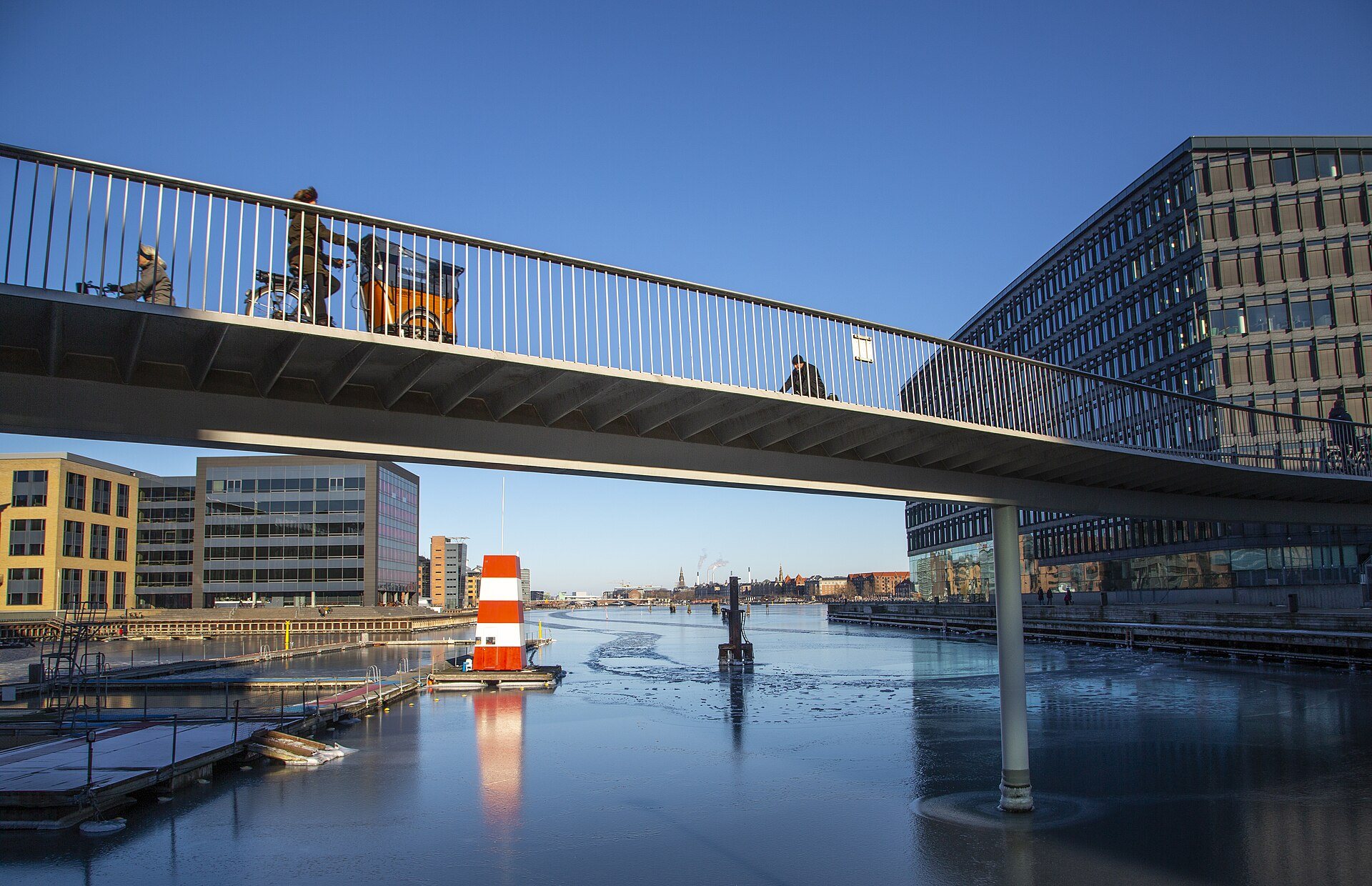
Cykelslangen and the Harbour Circle
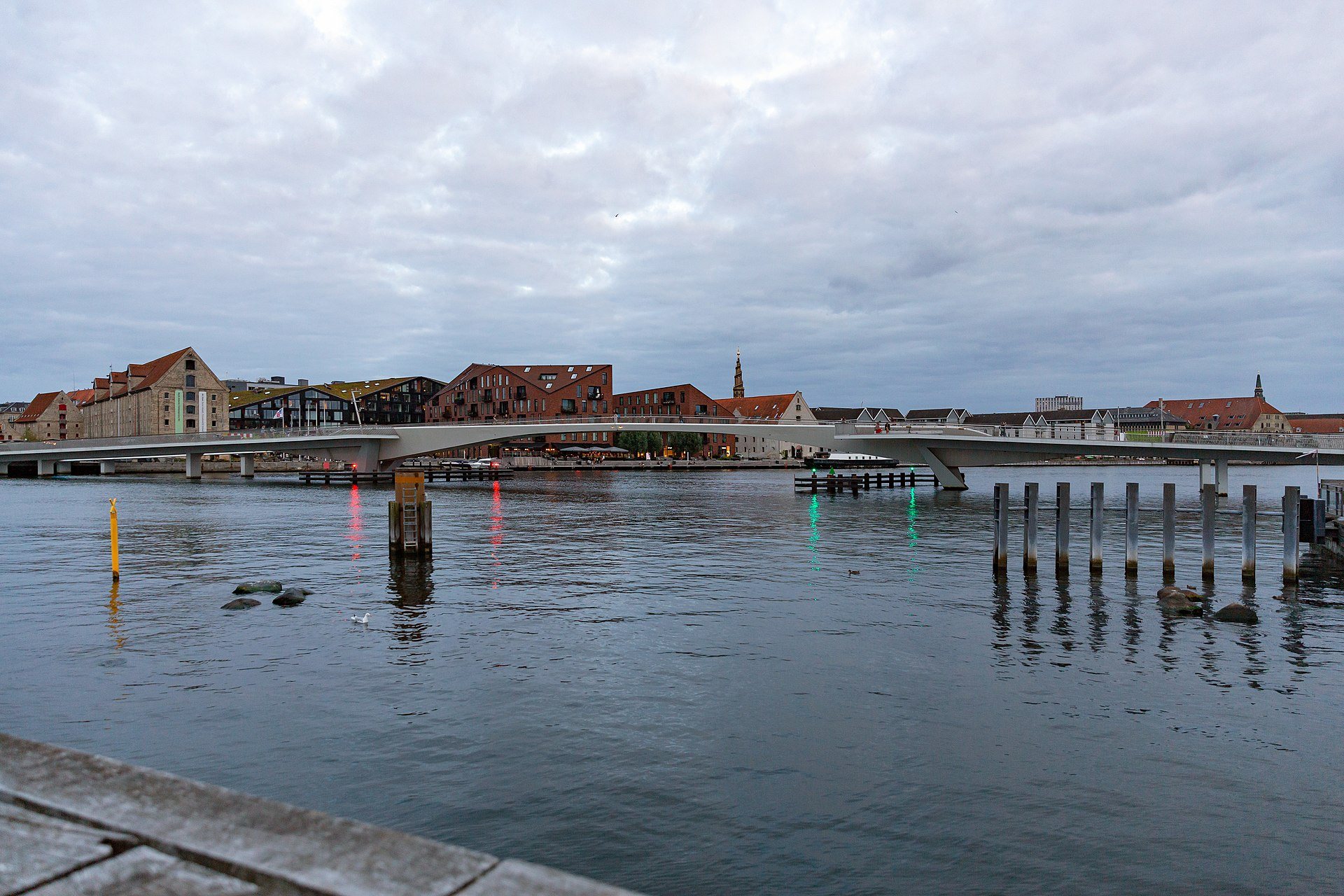
The elevated curve of Cykelslangen turns a circulation problem into a spatial experience. From the saddle, the bridge feels like a ribbon suspended between buildings and water; from below, it shows the precision with which Copenhagen separates routes without hiding them. This is active infrastructure, not a viewing platform, so keep a steady line and stop only after leaving the lane. Fold it into part of the Harbour Circle rather than feeling compelled to finish the entire loop. The pleasure lies in connection: bridges stitching neighbourhoods to bathing areas, homes, offices and former industrial ground. Riding this arc early in the day explains why movement here belongs to the scenery.
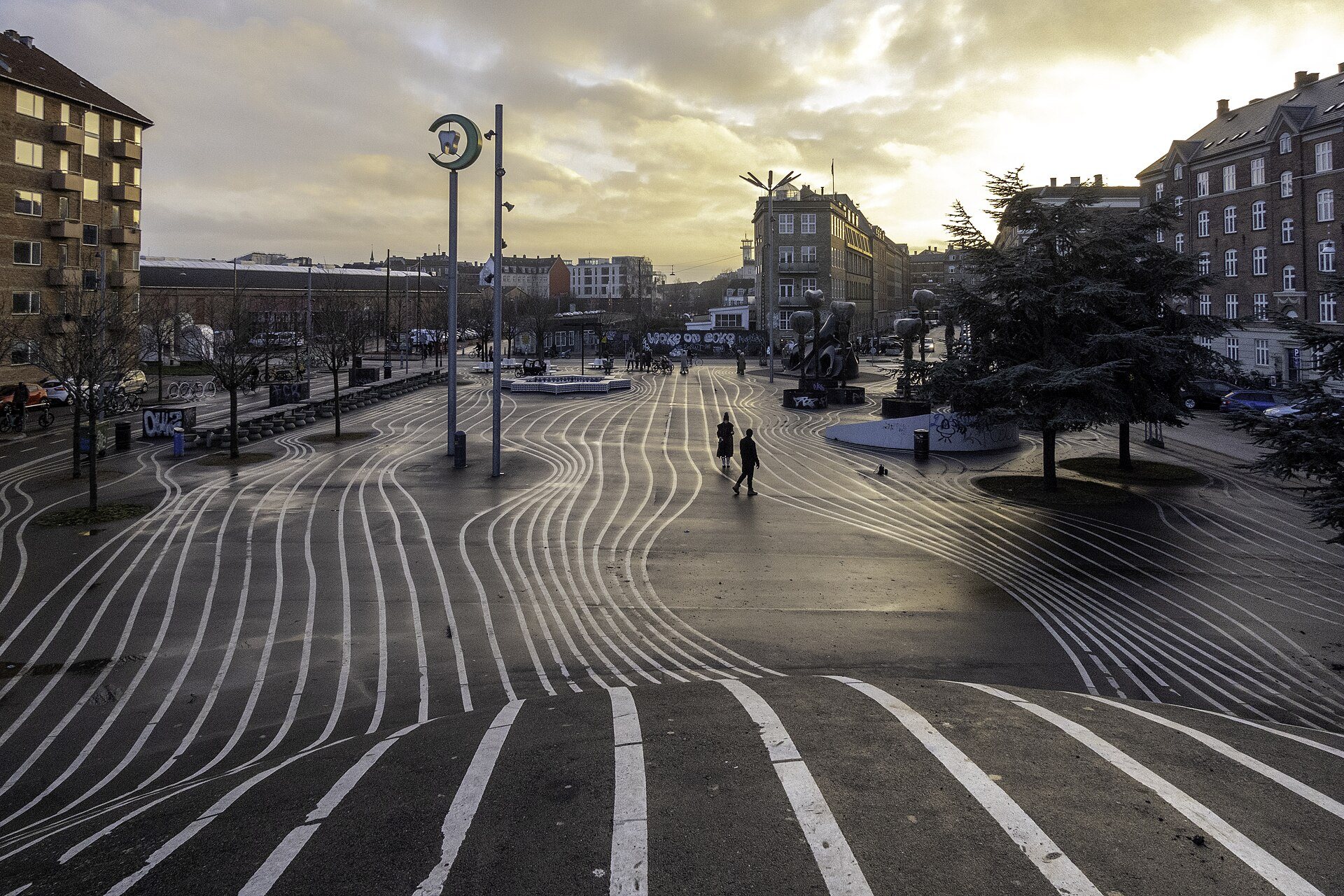
Superkilen
In Nørrebro, Superkilen deliberately interrupts the restrained palette commonly attached to Danish design. Red, black and green surfaces, together with objects associated with many countries, speak of a neighbourhood formed through migration, ordinary use and repeated acts of belonging. This is not an open-air museum detached from life. Bicycles cross it, children play, friends talk and residents use its benches without performing for a camera. Walk its full length and continue into nearby streets to see public design in relation to community. Curiosity is welcome, but so is discretion: observe the space without turning the people who animate it into pieces of street furniture.
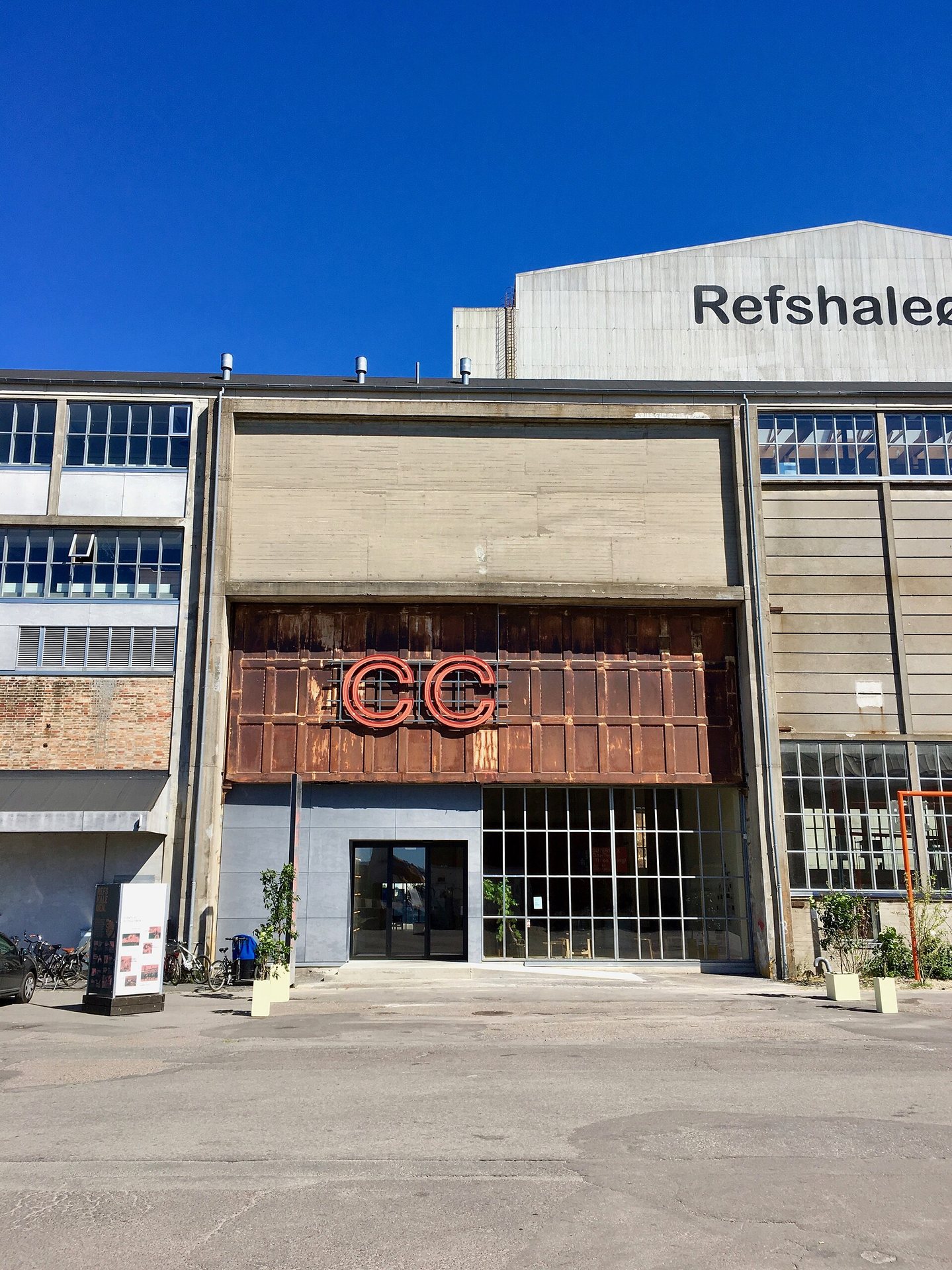
Refshaleøen and Copenhagen Contemporary
Refshaleøen retains the broad breathing space of port territory. Getting there is already part of the encounter: central Copenhagen falls away, sheds and cranes appear, bicycles meet open wind, and the purpose of each compound is not obvious from outside. Copenhagen Contemporary occupies a vast industrial building and presents art capable of speaking to that scale. Check current exhibitions and official opening information before travelling, since the programme changes the nature of a visit. Afterwards, do not hurry back. Remain on permitted routes, look towards the city from this less polished shore and allow time for a pause. Its appeal lies not in pretending the island is abandoned, but in watching production, culture and leisure negotiate one edge.
A day following the water
Treat this route as a flexible line. Adapt it to weather, current exhibitions and your confidence in the saddle; no section deserves to become a race.
- 01
Wake beside Nyhavn
Begin on foot before entering cycle traffic. Follow the canal while terraces are still being prepared, then move towards the inner harbour. This first hour establishes your bearings by water, reveals the wind and lets you identify lanes you will use later. An uncomplicated breakfast nearby offers time to watch the everyday city before Nyhavn grows busy.
- 02
Learn the bicycle rhythm
Collect a suitable bicycle, adjust saddle and brakes, and practise signals and turns somewhere calm. Move towards the harbour without occupying the left side of the lane. The first objective is not distance but predictability. When your shoulders relax and the movement becomes readable to others, architecture starts to appear instead of passing in a blur.
- 03
Ride across Cykelslangen
Join Cykelslangen and a sensible section of the Harbour Circle. Keep moving on the bridge and find a permitted place beyond it before stopping. From the quay, look back at the curve you have travelled and its relationship with water and buildings. Continue only while weather and energy make the ride pleasurable; completing a named circuit earns no prize.
- 04
Enter Nørrebro
Exchange the harbour for Nørrebro's streets and give Superkilen enough time on foot. Park considerately and explore its surfaces without intruding upon play or neighbourhood life. Nearby, look for an open workshop, bookshop or small maker-led shop where design appears as daily practice. Check access before crossing any threshold: a workshop is not automatically public space.
- 05
Cross towards Refshaleøen
Keep the afternoon for Refshaleøen and Copenhagen Contemporary. Depending on operation, weather and preference, the journey may combine harbour ferry and bicycle; consult official information that day. Inside the art centre, allow one exhibition to determine the pace. Outside, wind and immense sheds contrast usefully with Nyhavn's intimacy and Nørrebro's density.
- 06
End beneath a smaller light
Return before darkness makes an unfamiliar ride uncomfortable and hand back the bicycle under the agreed terms. Choose dinner by geography, reducing needless travel, and confirm whether booking is advisable. Do not chase a fixed menu or perfect stage set; seek a table where conversation can unfold. When candles are lit, let the city become an interior for a while.
A city stitched together by water
In Copenhagen, water does not divide neighbourhoods: it lends them a common light, while the bicycle quietly stitches their shores together.
Sleeping within the urban weave
Three real bases chosen for their geographic relationship with the station, harbour and historic centre. Their value depends on your route; always consult the current property listing before deciding.
Booking.com attribution through the CJ network is active. Links marked as sponsored may generate a commission for Vagamora if a booking is completed, at no extra cost to the user.
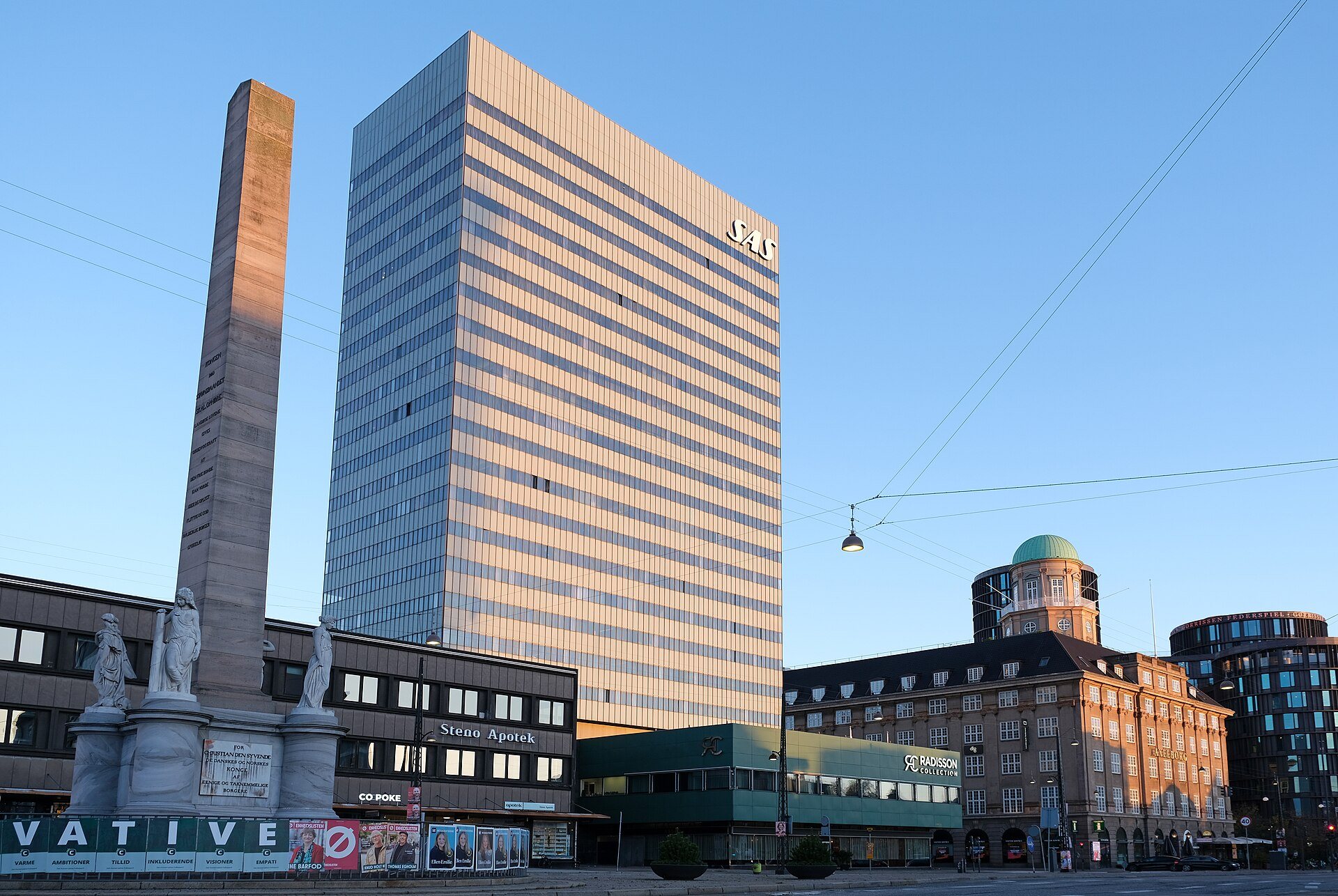
Radisson Collection Royal Hotel, Copenhagen
Its position by Central Station makes a rail arrival straightforward and places the journey at a hinge between the old centre, Vesterbro and routes leading towards the harbour. The building belongs to the history of Danish modernist design, so staying here can continue an architectural reading of Copenhagen without reducing it to scenery. It is a logical base for travellers who value immediate connections and want to begin cycling from the western edge of the central districts.
Check accommodation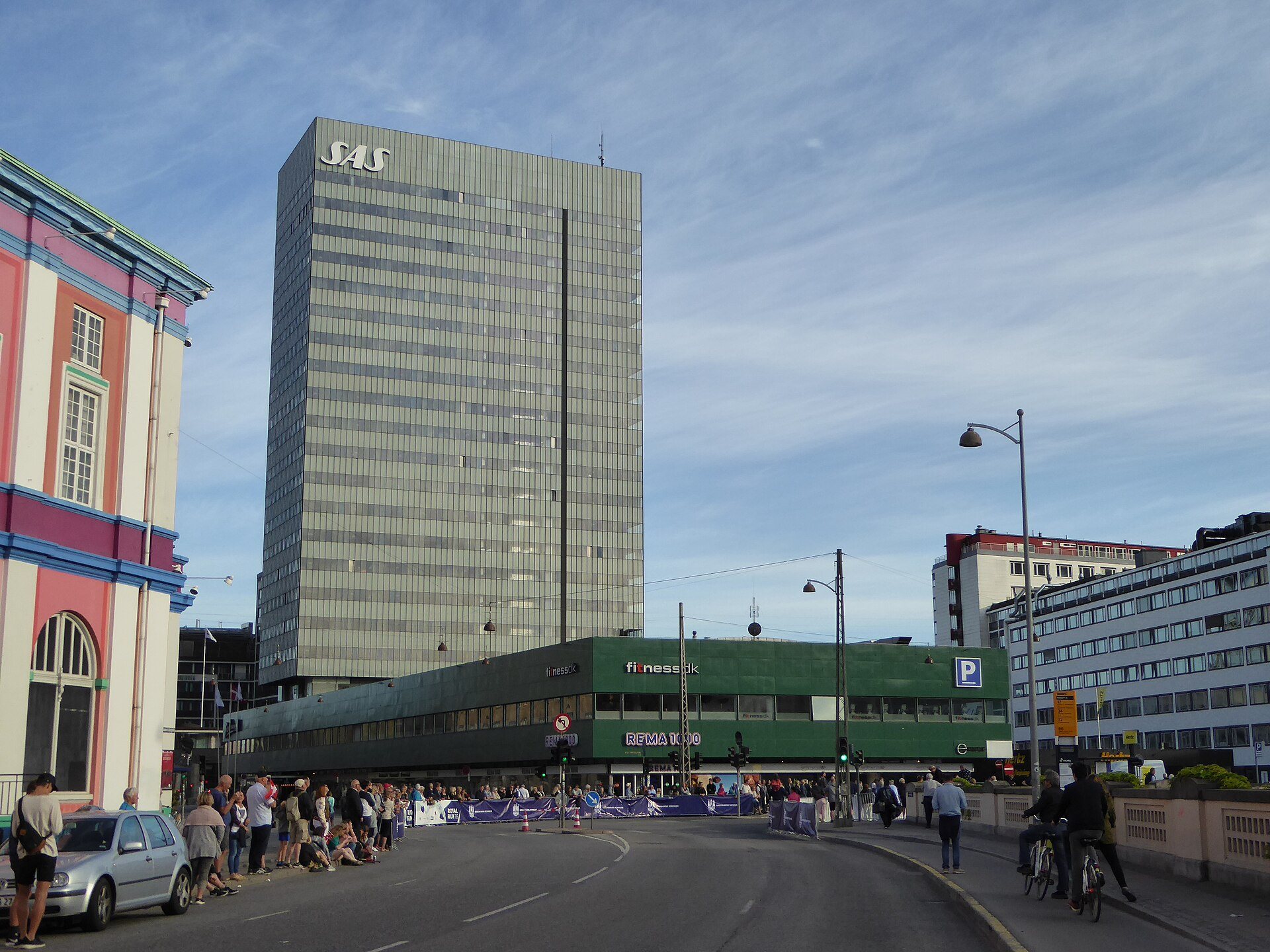
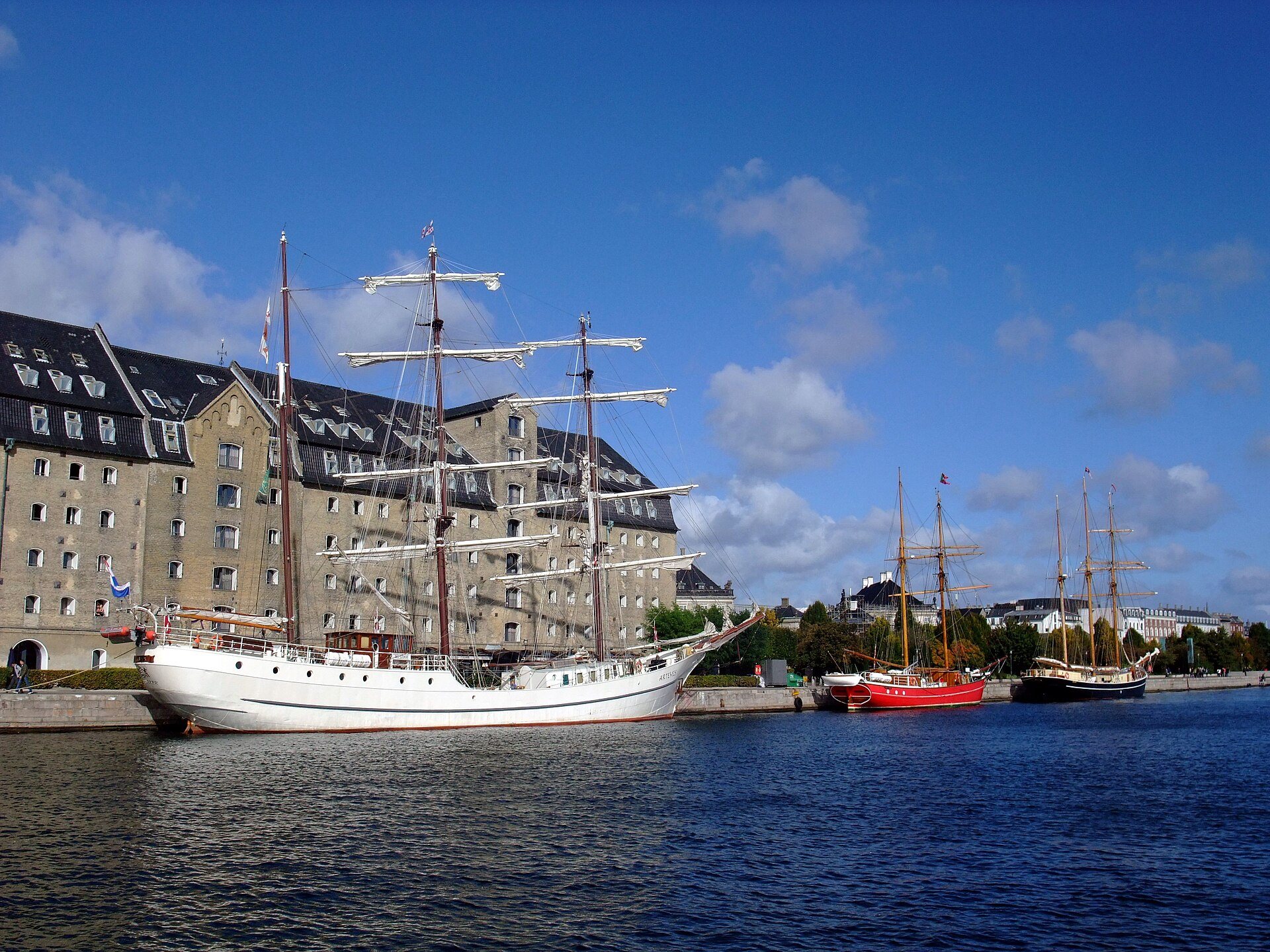
Copenhagen Admiral Hotel
Housed in a former harbour warehouse, Copenhagen Admiral Hotel puts water within the first view of the morning and keeps Nyhavn within an easy walk. Its editorial interest lies in the continuity between historic structure, working water and ceremonial Copenhagen. It suits an itinerary focused on the inner harbour, its bridges and links towards Refshaleøen, allowing the evening return to end beside the same shore that has organised the day.
Check accommodation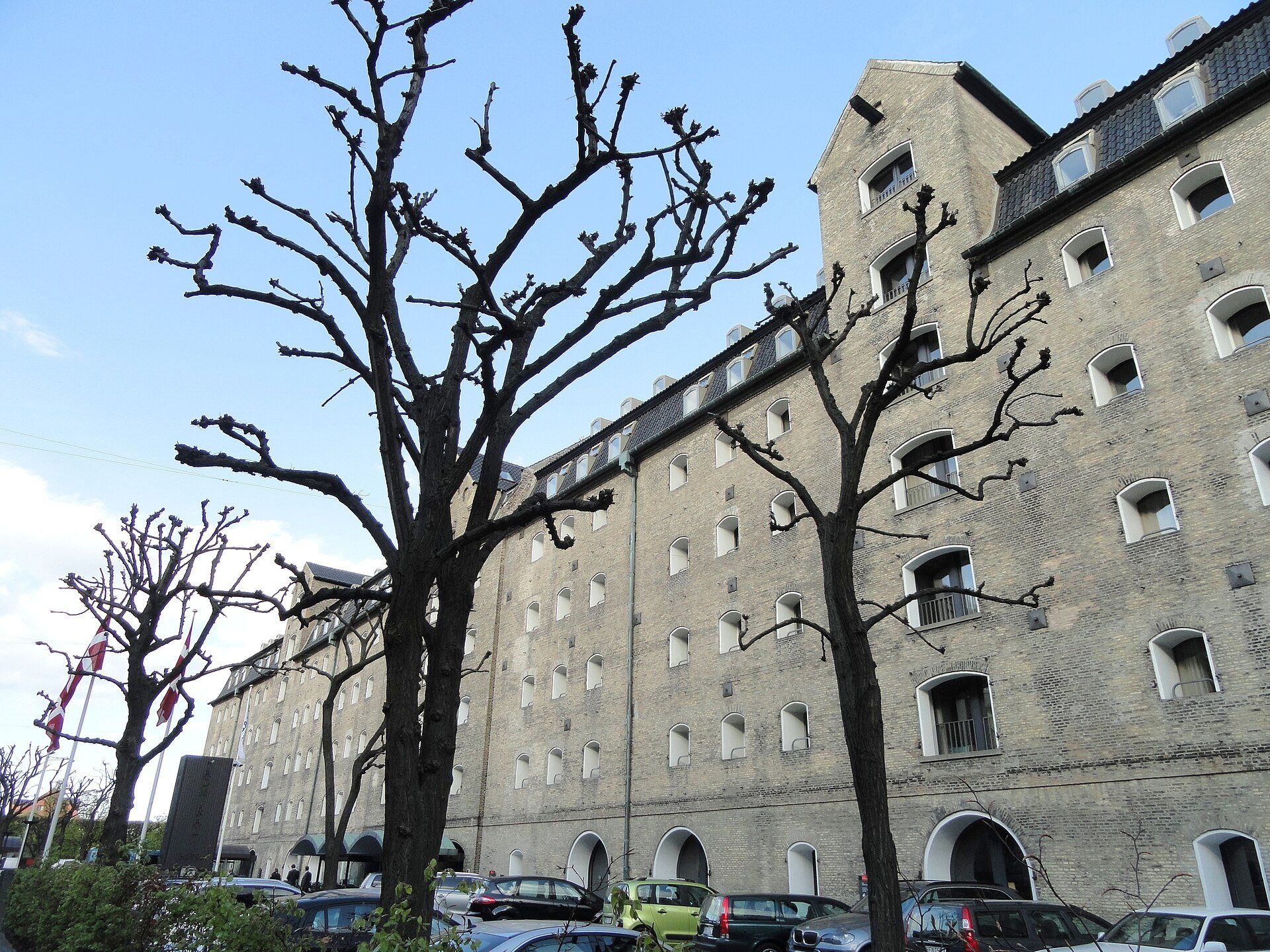
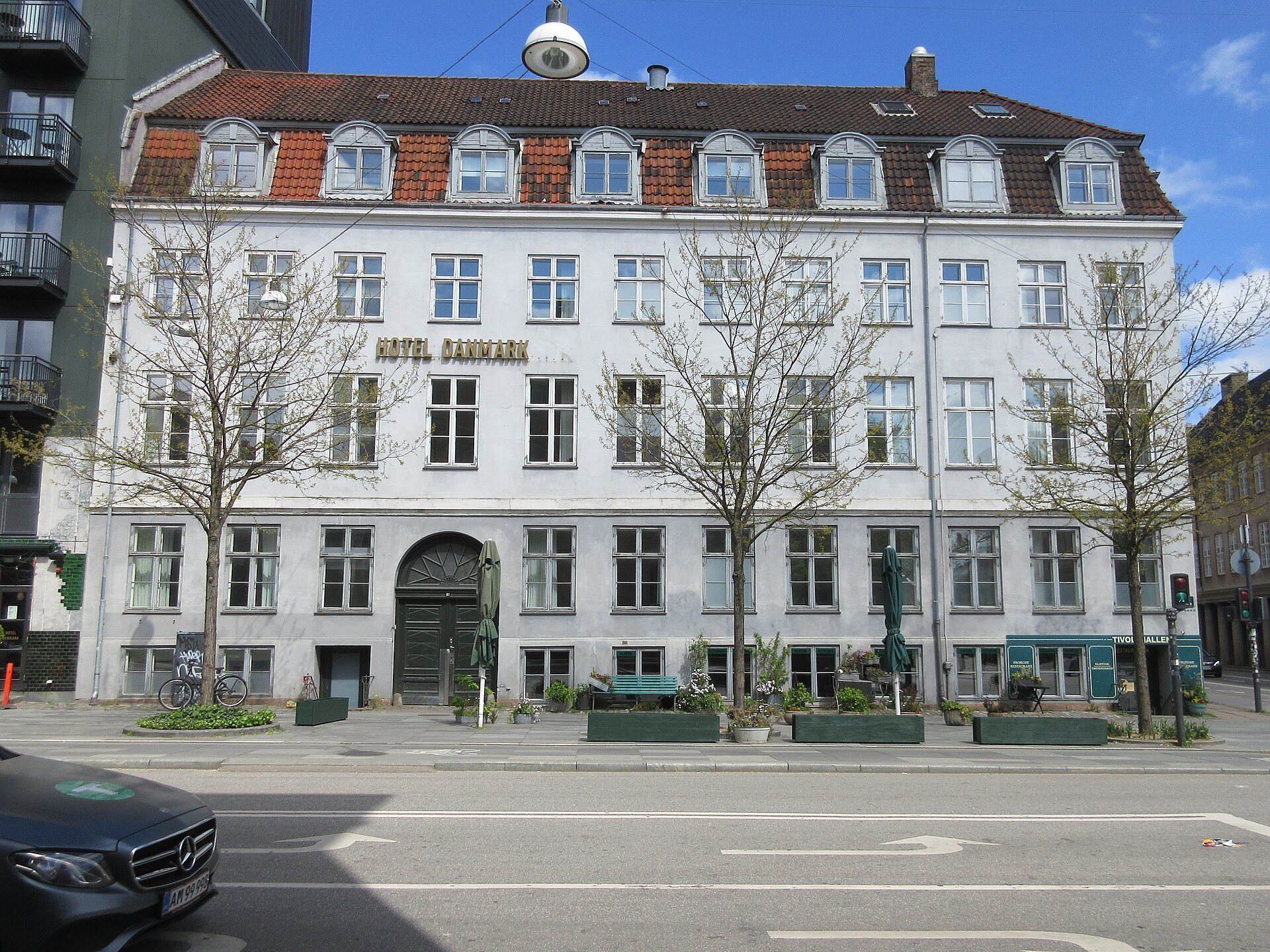
Hotel Danmark
Hotel Danmark provides a central base between City Hall, the Glyptotek and the streets leading towards the inner harbour. Its value for this route rests not on promises about rooms or services but on a position that makes it practical to alternate walking and cycling without turning every return into a long transfer. Civic architecture and museums form a useful threshold here before the canals come back into view. Check the current property listing directly for any concrete conditions.
Check accommodation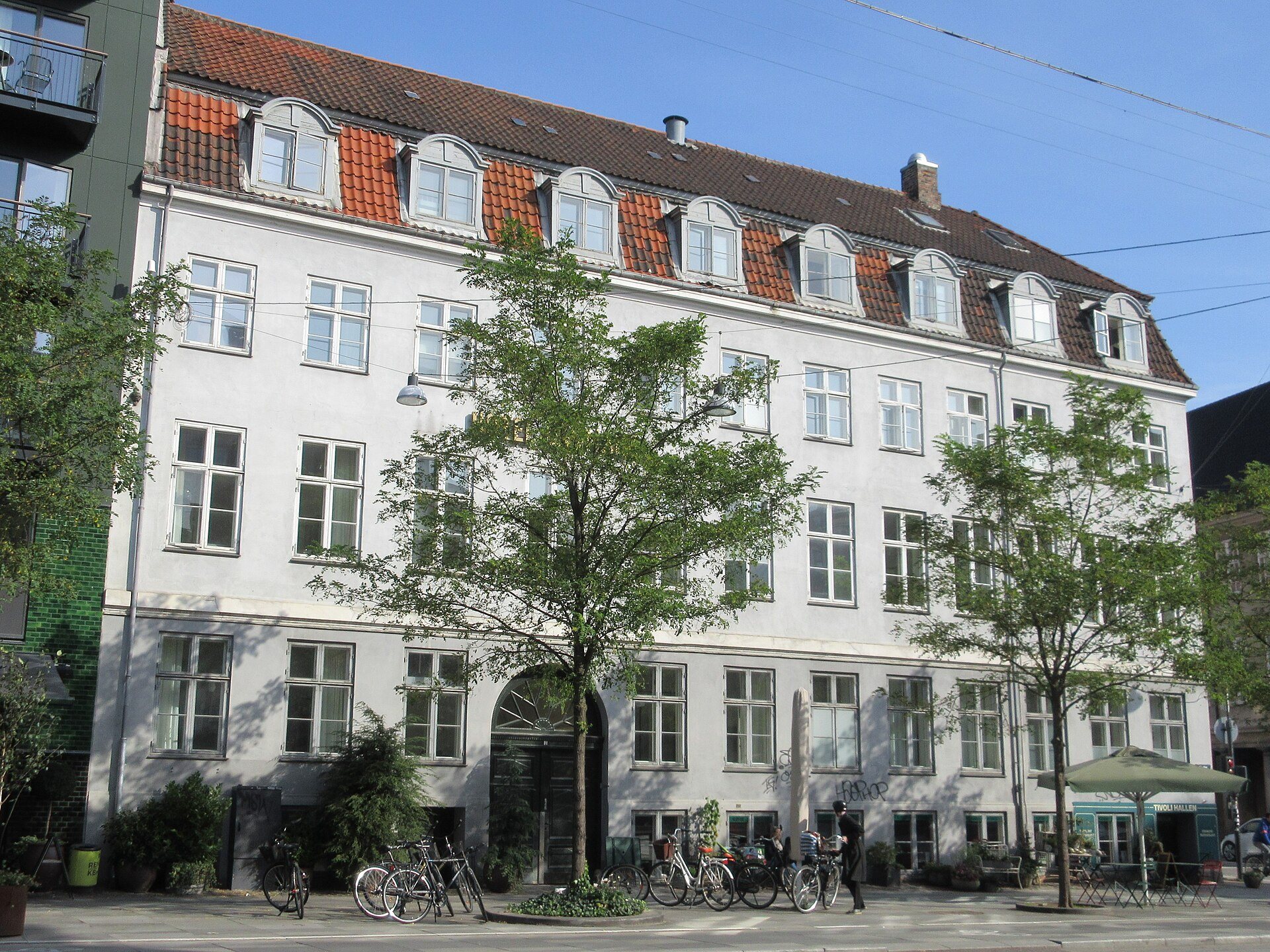
What remains after workshops close
There is an hour when workshop shutters descend and tools disappear from benches, yet the intelligence of hands remains visible across the city. It is present in a bicycle repaired rather than replaced, a chair intended to age, the exact way a wet coat hangs near a doorway. Copenhagen can look immaculate at a distance; close inspection reveals screws, patches, worn timber and provisional answers. That nearness rescues design from becoming an empty word.
Dinner belongs to the same material culture. Linen, glass, a flame trembling when the door opens: modest objects construct temporary shelter against night. The experience does not depend upon consuming a Danish symbol, but on respecting the rhythm offered by the room. Eat slowly, lower your voice, notice warmth returning to your fingers. Outside, lanes and timetables continue their functional world; inside, for a while, usefulness expands to include consolation.
The following morning, you may not retain the precise route. Memory will keep the instinct to look before turning, the blue curve above the harbour, a façade reflected upside down, the echo inside a hall occupied by art. The city will have taught something without declaring it: living well beside water requires designed connections, but also intervals where life has not been entirely solved.
Moving with care and room to change
Copenhagen's apparent ease depends upon shared rules. Good preparation helps you enjoy the city without interrupting the lives moving through it.
- On a bicycle, keep a predictable line and ride on the right. Look behind before overtaking or changing position, signal clearly by hand and never stop in the lane, even for a quick map check.
- Before hiring, check fit, brakes, lights, lock and return conditions. If urban traffic feels intimidating, practise somewhere calm or choose walking and public transport; cycling is not a test a visitor is obliged to pass.
- Obey traffic lights and bicycle-specific signs. Lanes carry fast commuter traffic at working hours; do not ride side by side when it prevents passing, and leave room for cargo cycles and people making necessary daily journeys.
- Harbour wind can increase effort and lower the felt temperature. Carry light layers, waterproof protection and gloves when appropriate; check the forecast before exposed crossings or a long day in the saddle.
- Use designated parking and lock the bicycle without obstructing doors, ramps, tactile paving or crossings. Keep the hire details and photograph a return point only if the provider's procedure specifically requests it.
- Check official opening information for museums, exhibitions, harbour ferries and creative venues on the day. Refshaleøen mixes public compounds, events and working areas; an open industrial door is not an invitation to enter.
- For harbour swimming or time on the water, use authorised areas only and follow local signage. Water quality, vessel movement and conditions can change; never jump from unapproved structures or enter undesignated channels.
- Reserve dinners that matter to the itinerary, particularly on busy evenings, but never assume menu, hours or availability. Discuss allergies directly with the establishment and confirm that your needs can be accommodated before sitting down.
- Combine cycling with train, metro, bus or ferry when fatigue or weather suggests it, checking current rules for carrying bicycles. Keep a walkable alternative so that heavy rain alters the day rather than ruins it.
- Nørrebro and the harbour are lived neighbourhoods, not photographic sets. Ask before portraying people or interiors, keep noise down at night, avoid blocking homes and support local shops without demanding that every space adapt itself to visitors.
Memory returns as reflection
A visual sequence in which the city remains moving matter: water, metal, colour, brick, hands and evening light.